The 3 Types of Artificial Intelligence Every Team Should Know
From narrow AI running on your phone today to the theoretical superintelligence researchers debate - here's how the categories actually break down.
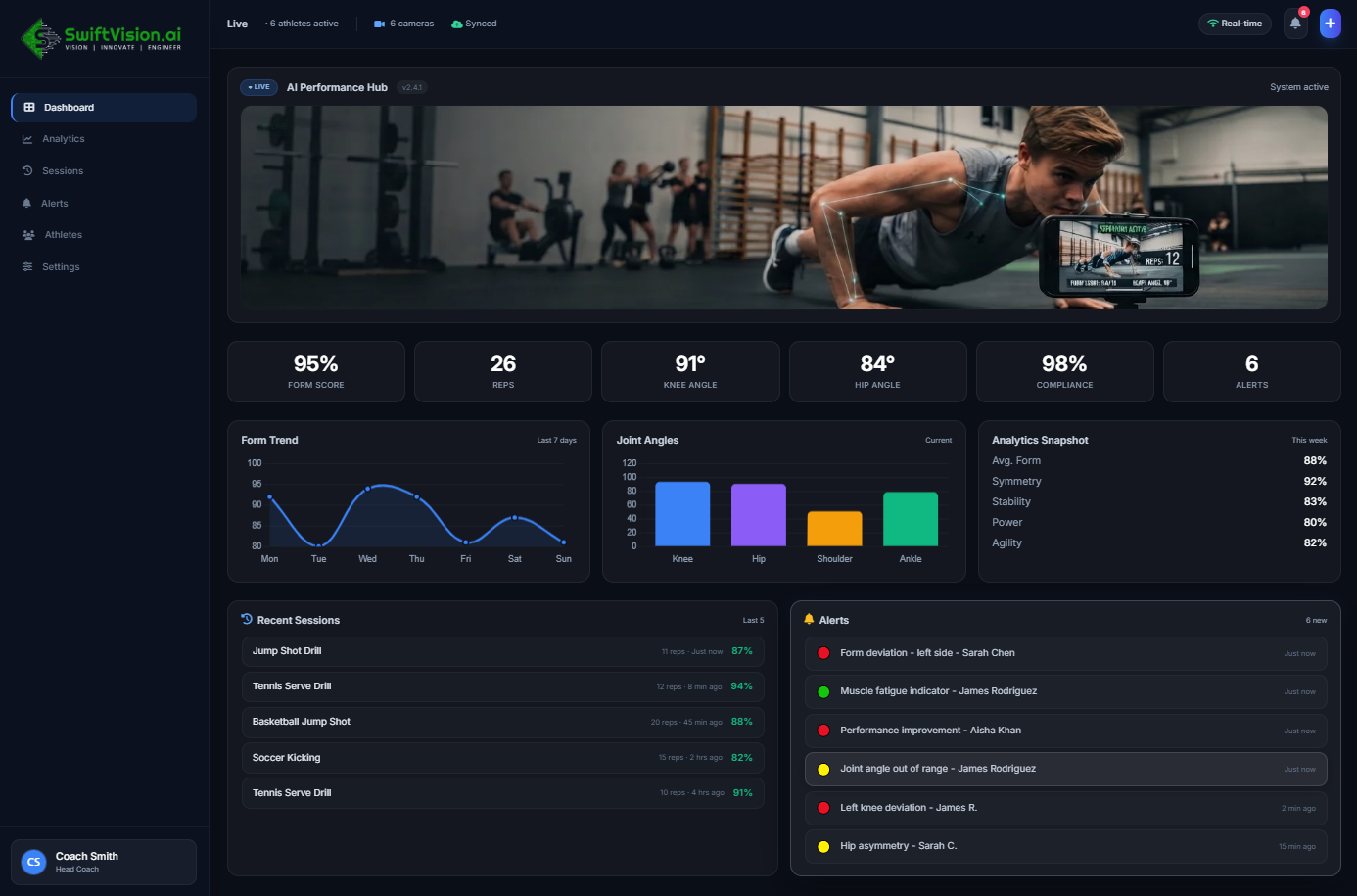
Most conversations about artificial intelligence jump straight to what a model can do, without pausing on what kind of system it actually is. That distinction matters, because "AI" is not one technology - it's a spectrum ranging from tools already running quietly in production to categories that remain purely theoretical.
At SwiftVision, we build and deploy computer vision systems for real operations, so this classification isn't academic for us - it shapes what we promise customers and what we don't. Here's how we break it down.
What is AI, really?
Strip away the marketing, and artificial intelligence is software that learns patterns from data and uses them to make predictions or decisions, instead of following a fixed set of hand-written rules for every situation. That's the whole idea. Everything else - chatbots, self-driving cars, defect-detection cameras on a factory line - is an application built on top of that core idea.
Narrow AI (ANI) - what exists today
Every AI system currently deployed in the world is narrow AI. It's trained to do one job - recognize a face, flag a defect on a production line, transcribe speech, generate an image - and it does that job without any real understanding of what it's doing outside that scope.
- Computer vision models that count people or detect PPE on a job site
- Voice assistants like Siri and Alexa
- Generative tools like ChatGPT and Midjourney
- Recommendation engines on shopping and streaming platforms
A camera trained to spot a hard-hat violation cannot, on its own, decide to also watch for a forklift backing up - someone has to build and train that separately. That's the defining limit of narrow AI: capability without transfer.
See narrow AI in action, today
Describe a use case in plain language and get a working vision app in minutes - no training data required.
Try it free →General AI (AGI) - the frontier being chased
AGI describes a system that can reason across many different tasks with roughly human flexibility, instead of being locked into one job. It would learn a new domain the way a person does - through context and experience - rather than needing to be retrained from scratch.
Nobody has built this yet. Current large language models can hold a conversation across many topics in a single session, which looks impressive, but they still don't set their own goals or reason about their own reasoning. Whether that gap is a few years away or a few decades away is genuinely disputed among researchers.
Artificial Superintelligence (ASI) - the theoretical ceiling
ASI is the hypothetical point where a system outperforms humans in every cognitive domain at once - science, strategy, creativity, social reasoning. It remains firmly in the research and philosophy space rather than engineering, and it's the category most associated with both the biggest promised upside and the biggest safety concerns, particularly around keeping a system's goals aligned with what its designers actually intended.
How the three categories compare
| Type | Also called | Status today | Example |
|---|---|---|---|
| ANI | Narrow / Weak AI | Deployed everywhere | SwiftVision camera detecting PPE |
| AGI | General / Strong AI | Active research frontier | Not yet achieved |
| ASI | Superintelligence | Theoretical | No existing system |
Get new posts from SwiftVision
Short, practical reads on computer vision and AI - no spam, unsubscribe anytime.
FAQs
What's the difference between weak AI and strong AI?
Weak AI (ANI) does one job well but can't generalize past it. Strong AI (AGI) would handle any intellectual task with human-like flexibility. Everything commercially deployed today is weak AI.
Is AGI close to being achieved?
It's disputed. Current models are impressive across many tasks but still lack genuine autonomous goal-setting, so estimates for AGI range from a few years to several decades out.
Does SwiftVision use general AI?
No - SwiftVision's products are narrow AI, purpose-built for specific vision tasks like detection, counting, and monitoring. That's a deliberate choice: narrow systems are reliable, auditable, and ready to deploy now.