AI Tennis Swing Analysis:
How Computer Vision Tracks Every Shot and Rally
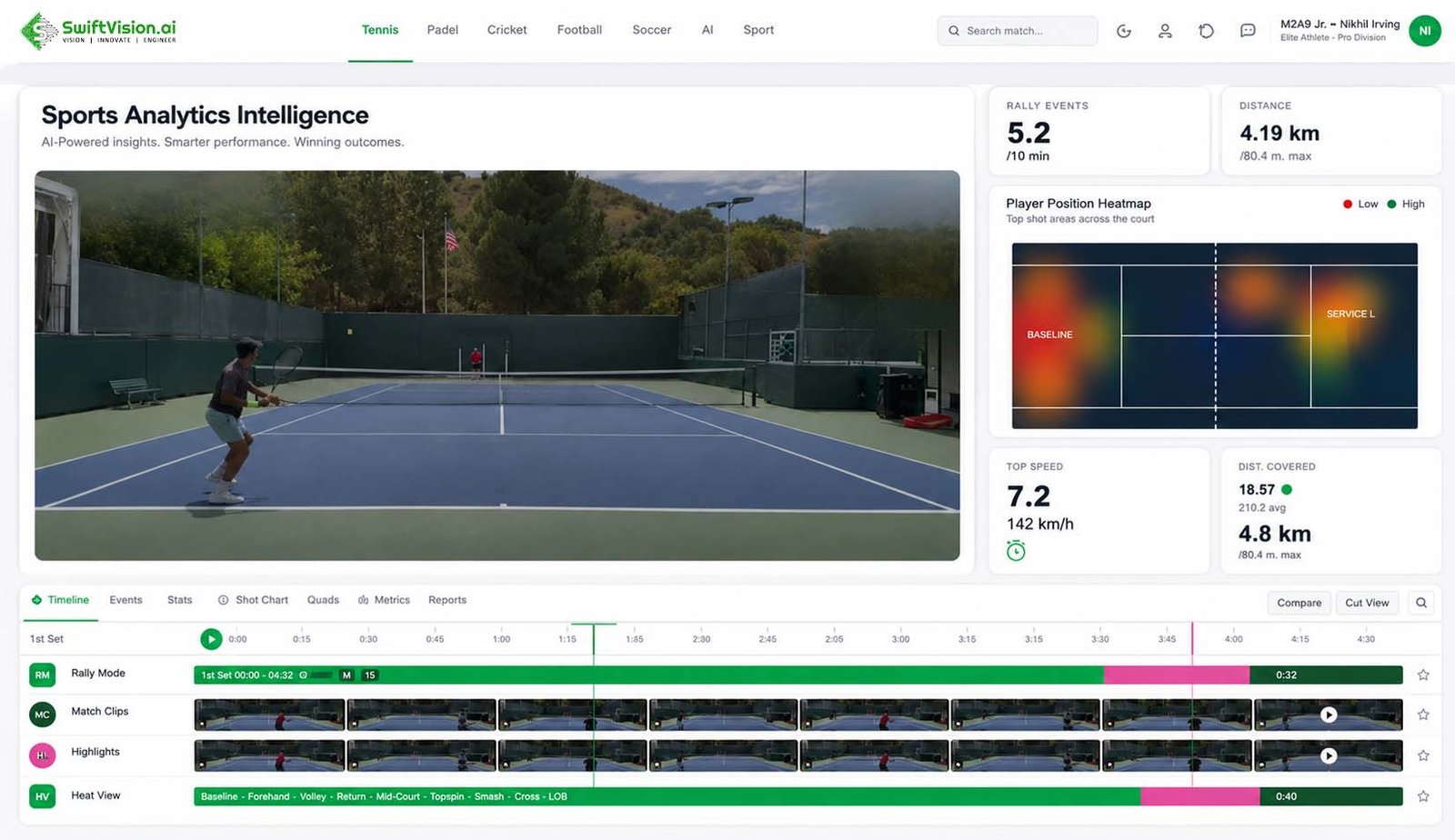
Tennis swing analysis with AI turns normal court video into objective data on every serve, stroke and rally. This guide explains how computer vision tracks the ball and the player, what coaches can measure, and how academies use it to cut hours of video review.
01 · Overview
What is AI tennis swing analysis?
AI tennis swing analysis uses computer vision to watch tennis video, follow the ball and the players frame by frame, and turn every shot into data. It tells coaches which stroke was played, where the ball was struck, how fast it travelled and where it bounced, for every rally in a session.
Most coaches still review tennis footage by hand, scrubbing through hours of video to find the few shots that matter. A tennis ball can leave the racket at well over 100 km/h, so small details in timing and contact are hard to judge by eye. AI analysis removes the manual work and gives coaches and players the same objective numbers after every practice and match.
02 · Technology
How does computer vision track a tennis swing and the ball?
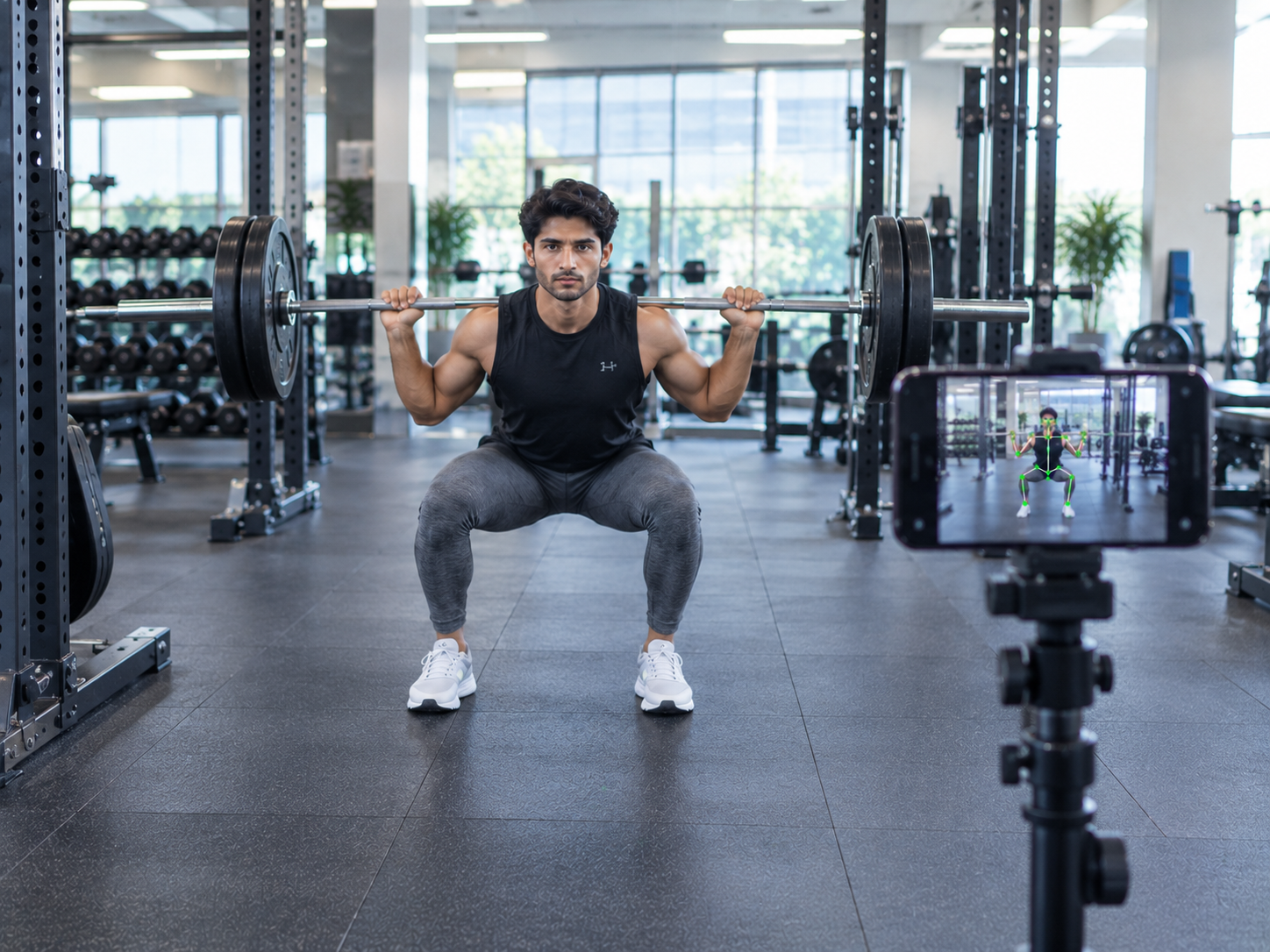
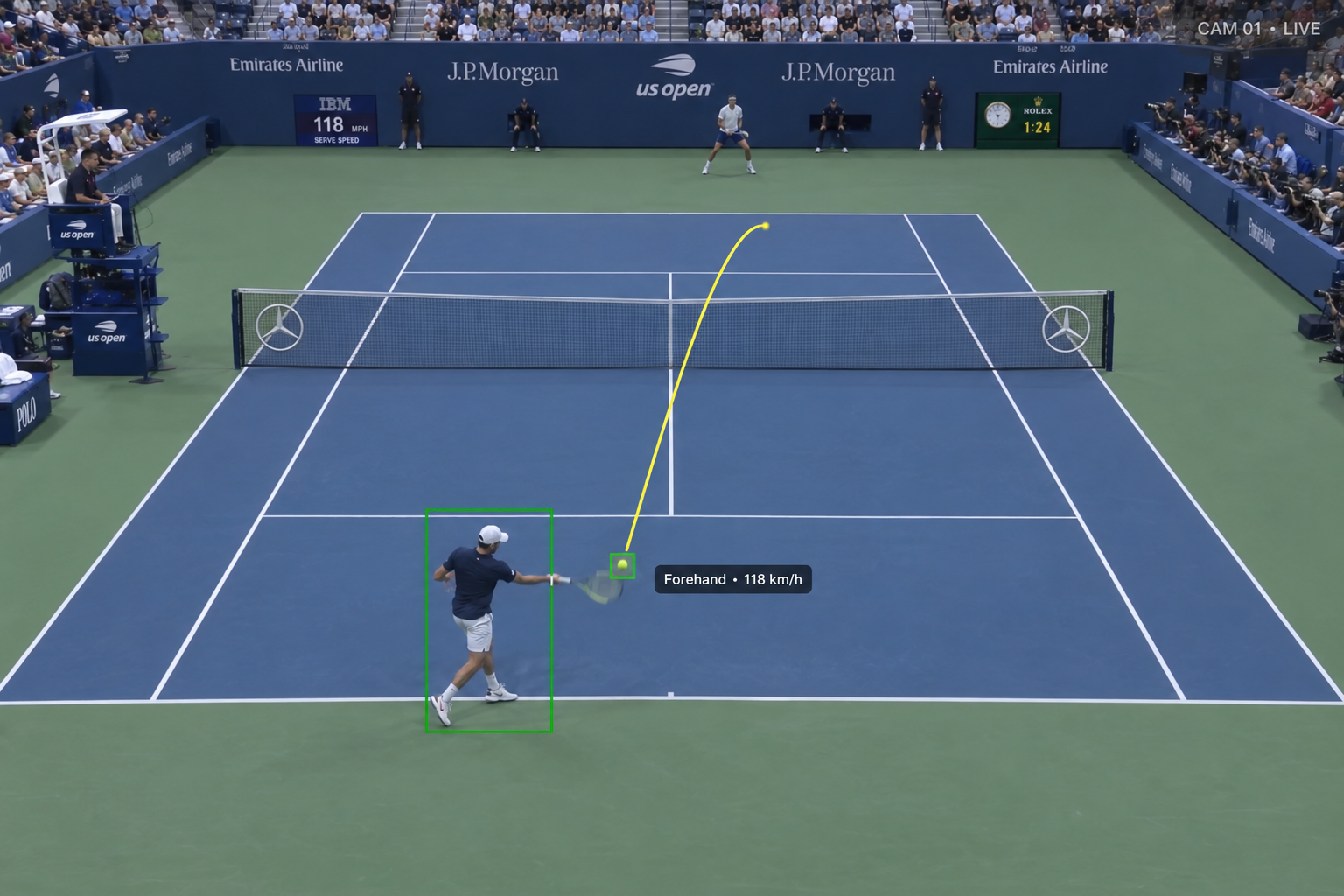
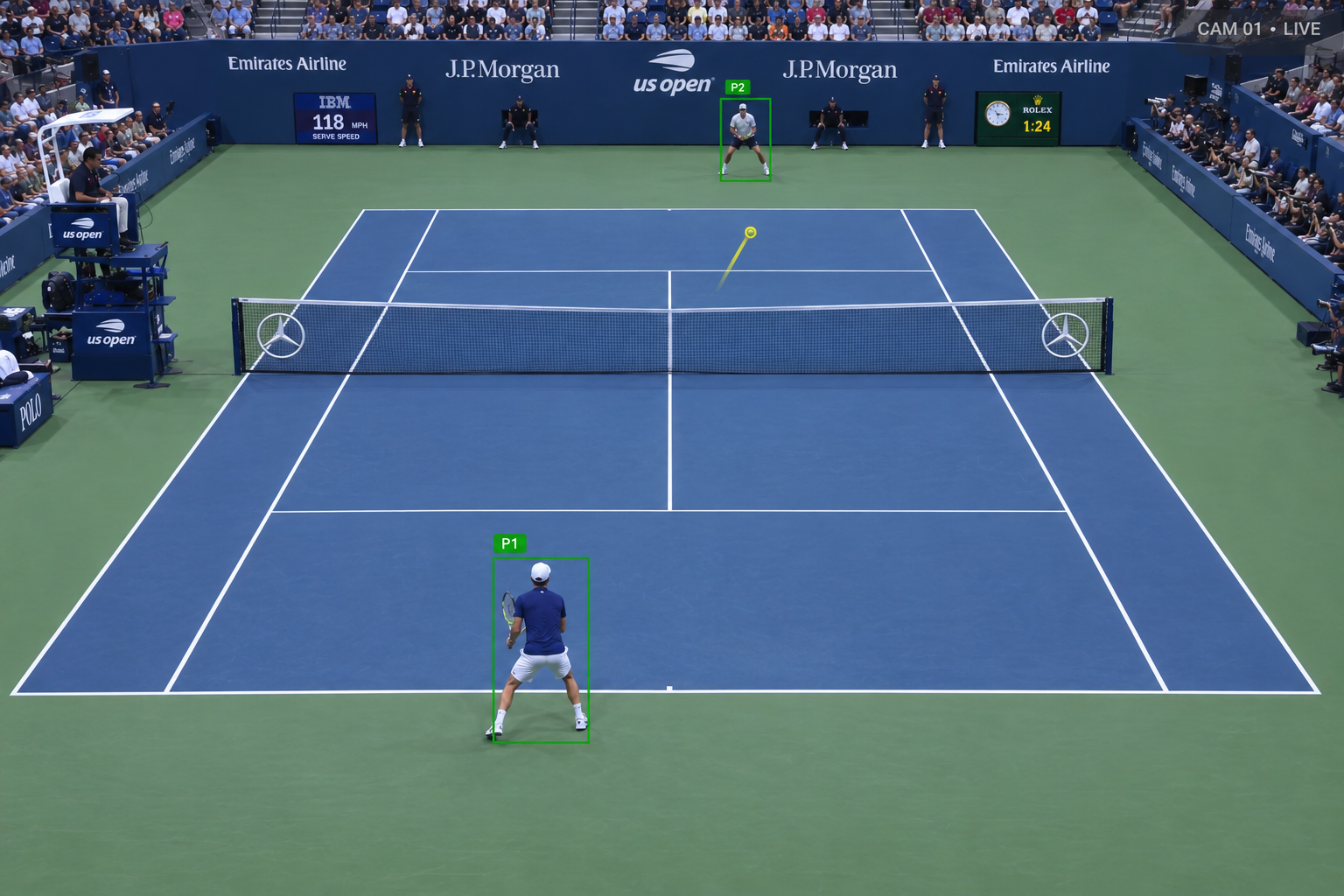
Two AI models work together. A ball tracking model finds the small, fast-moving ball in each frame and links the detections into a trajectory. Models such as TrackNet are built for exactly this, because a tennis ball is often blurred and only a few pixels wide. A pose estimation model maps 17 body keypoints on each player, so the system can follow the shoulders, elbows, wrists, hips and knees through the swing.
Combining the two gives the full picture. The moment the ball trajectory meets the player's hitting arm marks the contact point. A sudden change in the ball's direction near the ground marks a bounce. Court calibration then maps every pixel onto real court lines, so bounce locations and player positions can be shown on a court diagram. The same pose estimation used for posture tracking in fitness powers the swing analysis here.
03 · Impact
What results can AI tennis analysis deliver?
The biggest gain is time. Coaches stop editing video and start coaching from data. See the full story in our sports case studies.
- 90%Less manual video review at a tennis academy
- 17Body keypoints tracked on each player per frame
- 0Sensors needed on the racket or the player
04 · Process
How does AI tennis swing analysis work?
From a court camera to a coaching report in four steps.
-
 Step 01
Record
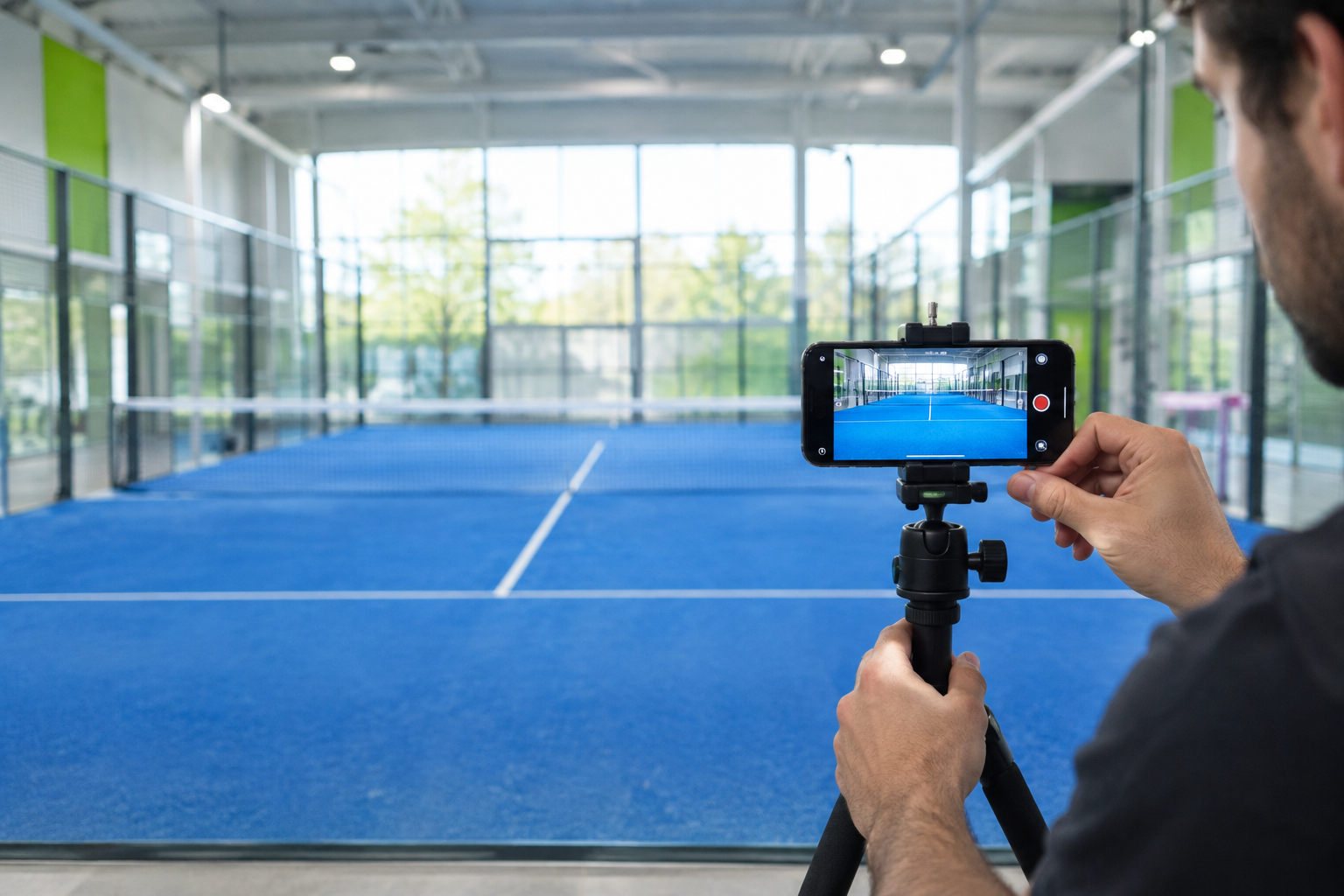
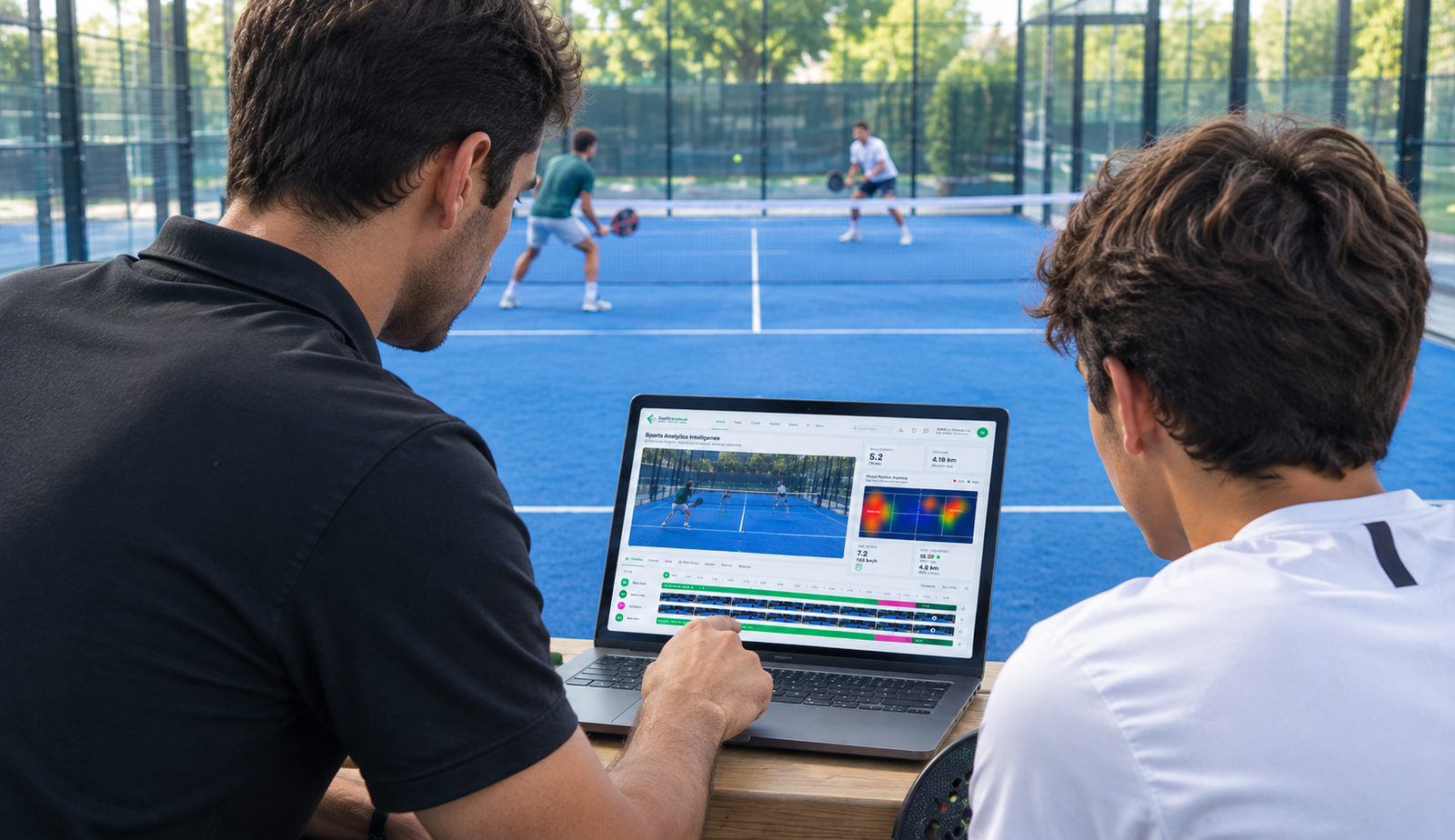
A fixed camera behind the baseline records practice or match play. Nothing is attached to the racket or the player.
-
 Step 02
Track
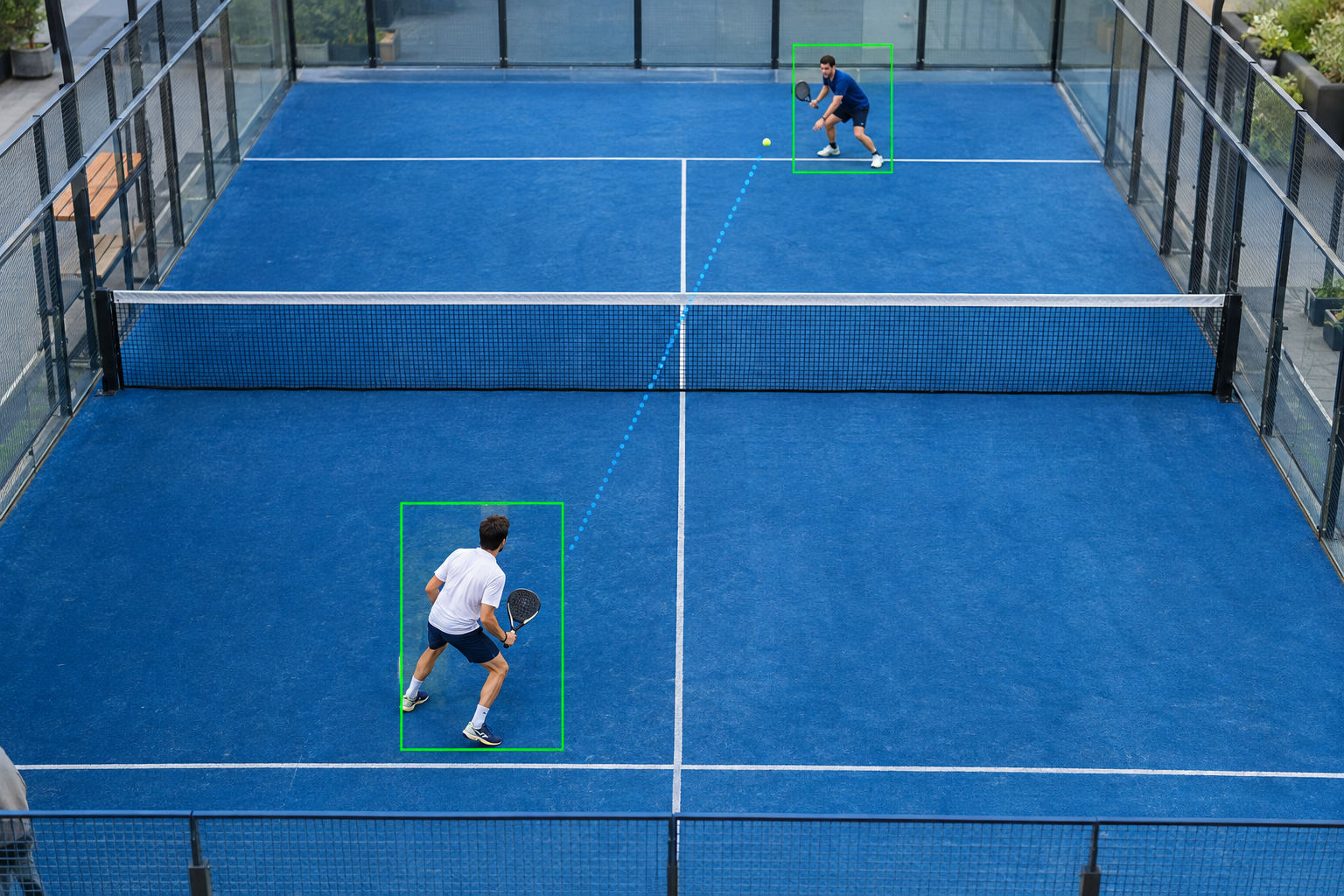
AI follows the ball and both players frame by frame and maps every position onto the court.
-
 Step 03
Analyze
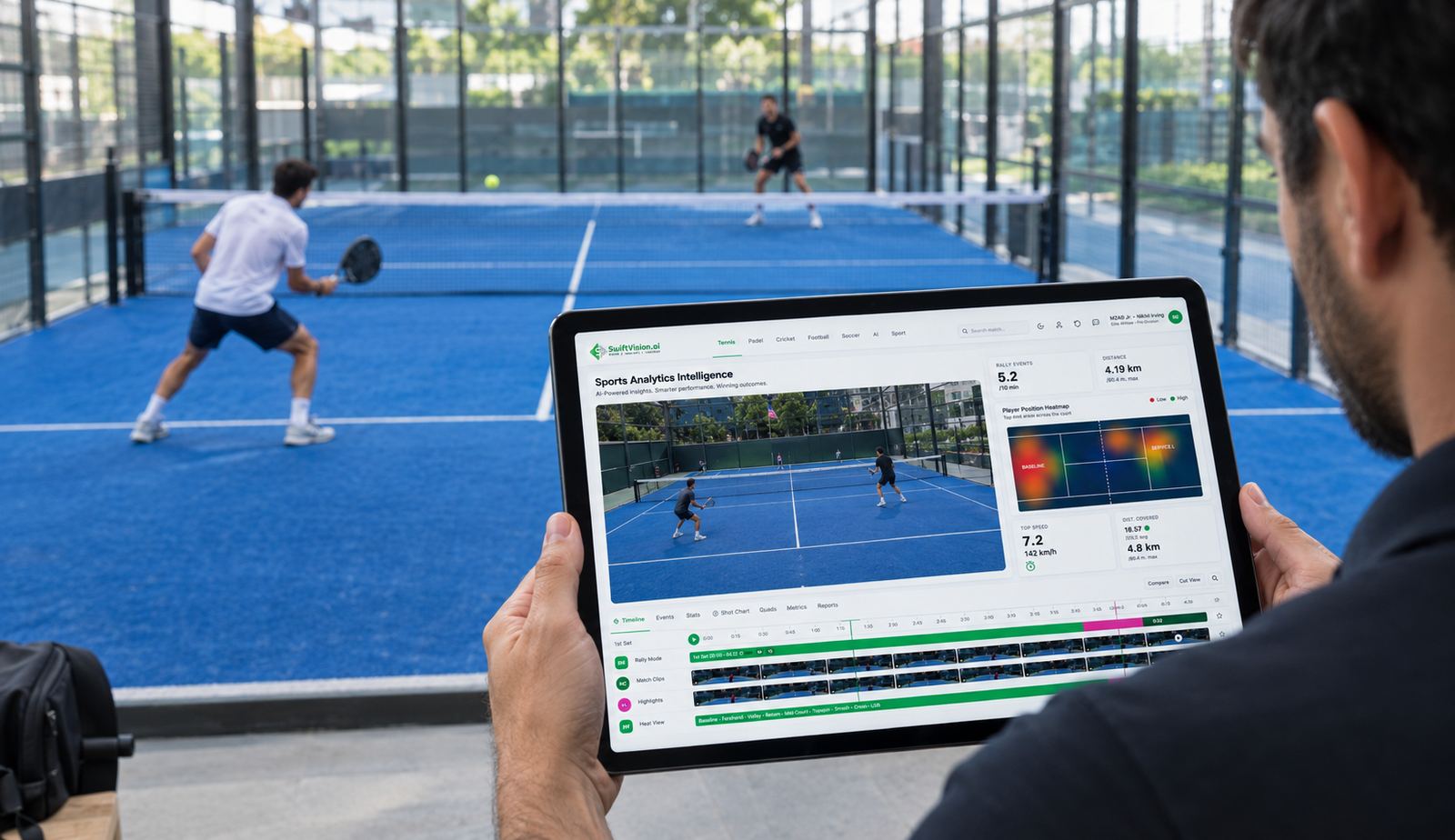
Each shot is classified as a serve, forehand, backhand or volley, with contact point, speed and bounce location.
-
 Step 04
Review
Coaches get rally clips, shot charts and per-player stats minutes after the session ends.
05 · Benefits
What do coaches and players gain?
AI tennis analysis changes how a coaching team spends its time and what players can see about their own game.
- Every shot tagged automatically, so no one scrubs through video by hand.
- Objective numbers on contact point, ball speed and bounce placement.
- Rally clips and shot charts ready right after practice or a match.
- Progress tracked over weeks and seasons, not just from memory.
- One camera setup gives the same data on every court and for every player.
06 · Comparison
Manual video review vs AI tennis analysis
Here is how reviewing tennis footage by hand compares with AI tennis swing analysis.
| Feature | Manual review | AI tennis analysis |
|---|---|---|
| Shot tagging | Coach tags shots by hand | Every shot detected and tagged automatically |
| Review time | Hours of scrubbing per session | Rally clips ready after the session |
| Ball data | Speed and placement guessed by eye | Measured from the ball trajectory |
| Consistency | Varies by coach and court | Same rules on every court |
| Reporting | Notes and memory | Shot charts, heatmaps and player stats |
07 · Applications
Where is AI tennis analysis used?
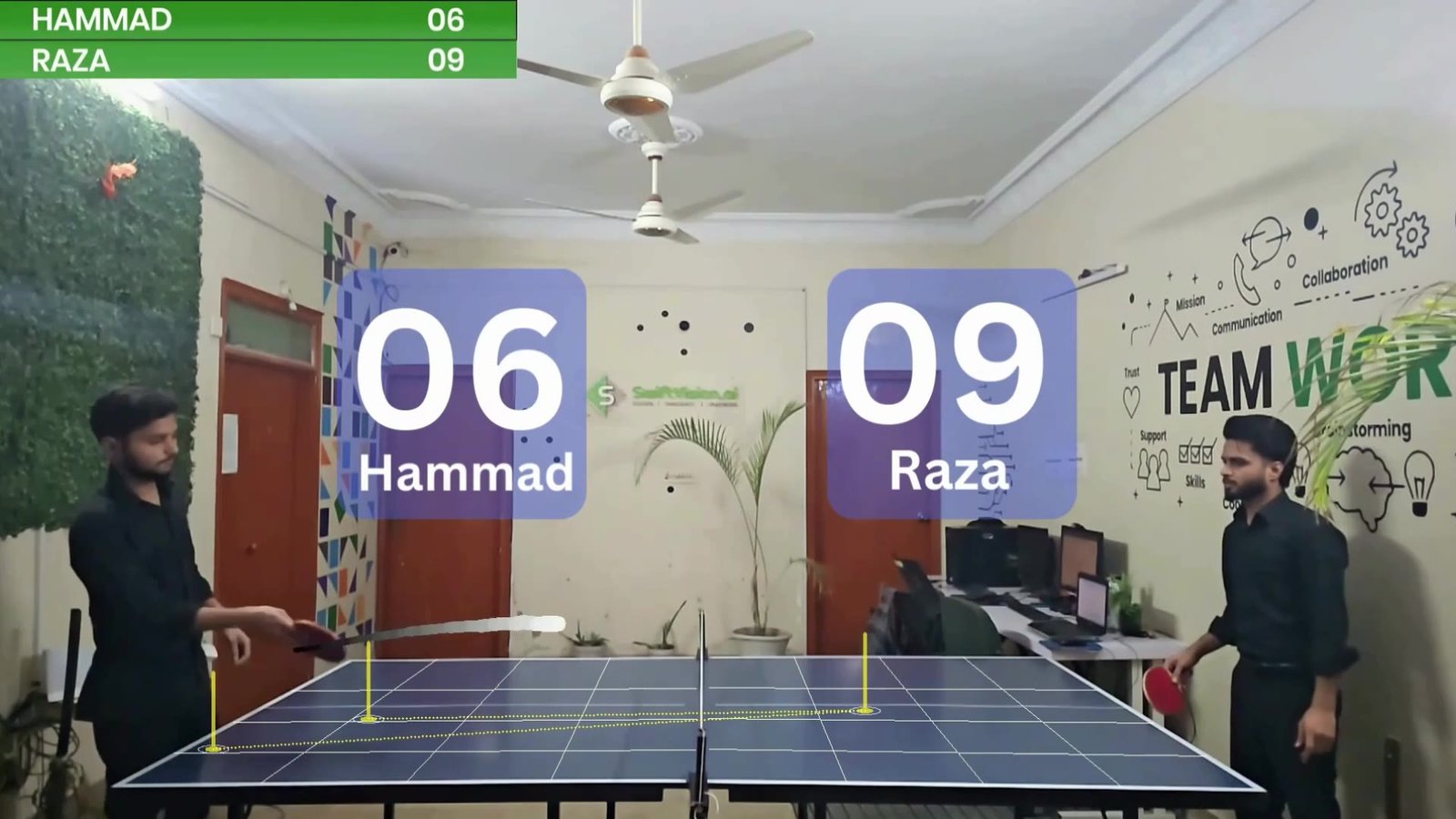
The same technology serves three groups in tennis, and it carries over to padel and pickleball. Learn more about our sports analytics and ball tracking software.
-
Academies & clubs
Session reports and rally clips for every player, on every court.
-
Federations & tournaments
Consistent match data across venues, courts and events.
-
Players & coaching apps
Phone-recorded practice turned into shot stats and swing feedback.
08 · FAQ
Frequently asked questions
What can AI tennis swing analysis measure?
It can detect the stroke type (serve, forehand, backhand, volley), the contact point, ball speed, bounce location and rally length. Pose tracking adds swing mechanics such as shoulder rotation and knee bend, and player tracking adds court coverage and movement.
How accurate is AI ball tracking in tennis?
Accuracy depends mainly on the camera. Higher frame rates, such as 60 fps or more, a clear view of the whole court and a fixed mount all help, because the ball moves fast and is small in the frame. A pilot on your own courts is the best way to measure it.
Where should the camera be placed for tennis analysis?
A fixed camera behind and above the baseline, with the full court in view, works best for ball tracking and shot placement. A second camera from the side gives a clearer view of swing mechanics and contact point.
Can AI tell if a tennis ball is in or out?
Yes, for training and match statistics. Court calibration maps each bounce onto the court lines, so the system can show in, out and placement on a court diagram. It is a coaching and analytics tool, not a certified line-calling system for officiating.
Does the same technology work for padel and pickleball?
Yes. The same ball tracking, player tracking and court mapping approach works for padel and pickleball, with models trained on footage of each sport and its court layout.
How is video analysis different from racket sensors?
Racket sensors only measure how the racket moves. Video analysis also sees the ball, the player's body, both players' positions and where every shot lands, and there is nothing to attach, charge or pair before playing.

Work with SwiftVision AI
Bring AI tennis analysis to your academy or club
Tell us about your courts, cameras and players, and our team will show how ball tracking and swing analysis fit your program.