Volleyball Video Analysis:
How to Use Rotation Stats to Win More Sideouts
Rotation stats show a volleyball coach exactly where points are won and lost. This guide explains which numbers to track, how AI video analysis collects them from a single camera, how to read a rotation report, and what to change when one rotation keeps leaking points.
01 · Why it matters
Why do rotation stats matter so much in volleyball?
A volleyball team plays every set in six rotations, and each one changes who attacks from the front row and where the setter starts. That is why a team with a good overall record can still bleed points in one or two rotations, for example when the setter is in the front row and only two front-row hitters are available.
Overall percentages hide those problems. Volleyball video analysis by rotation shows them in a single table, so coaches know which line-up to fix before the next match instead of guessing from memory. It is one of the most practical uses of our volleyball video analysis software.
02 · The technology
How does AI track a volleyball match from video?
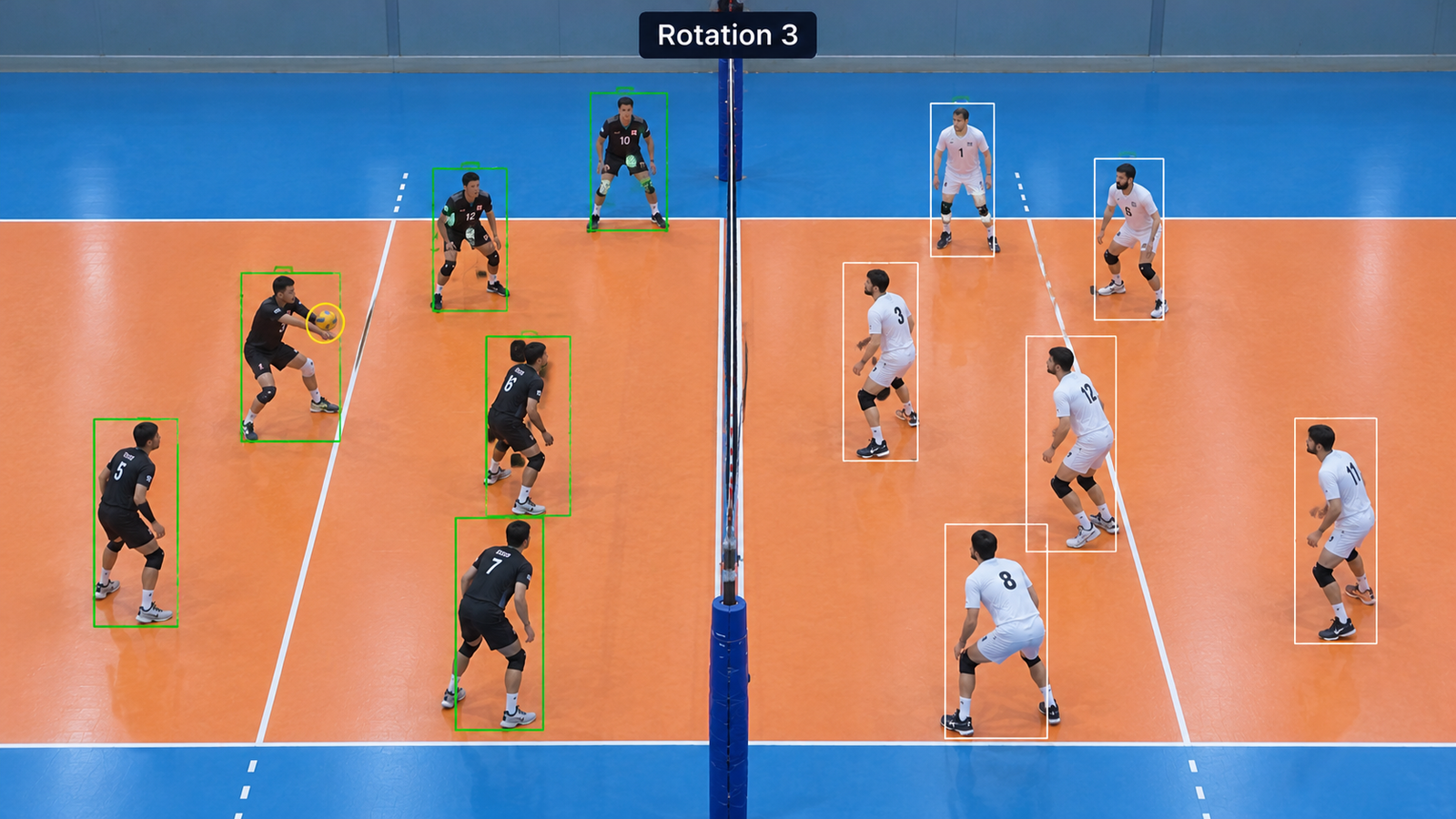
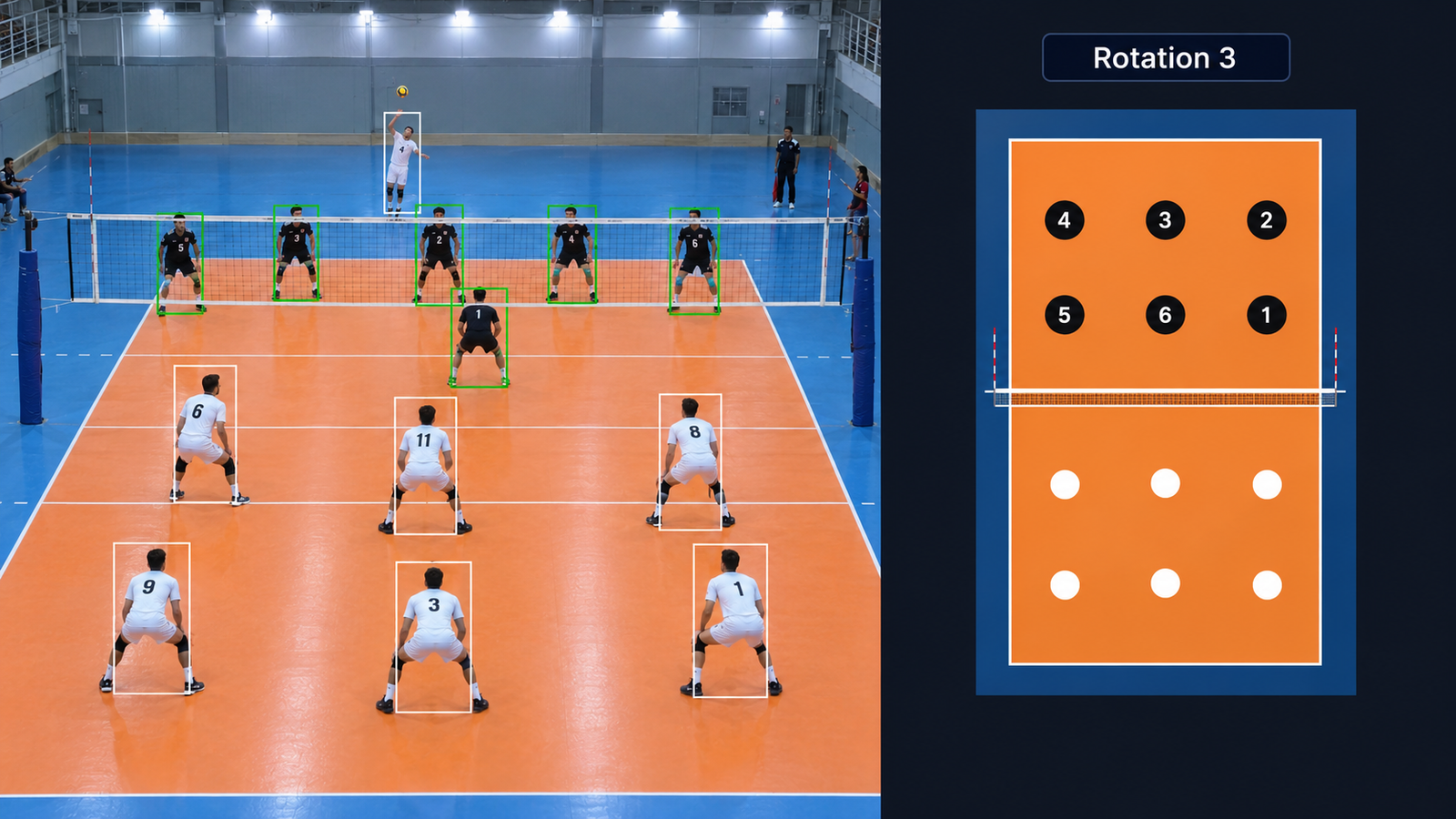
An object detection model finds all 12 players and the ball in each frame, and a tracker keeps an ID on every player through the rally. Jersey colour splits the two teams, and court calibration maps every position onto a top-down court in real metres.
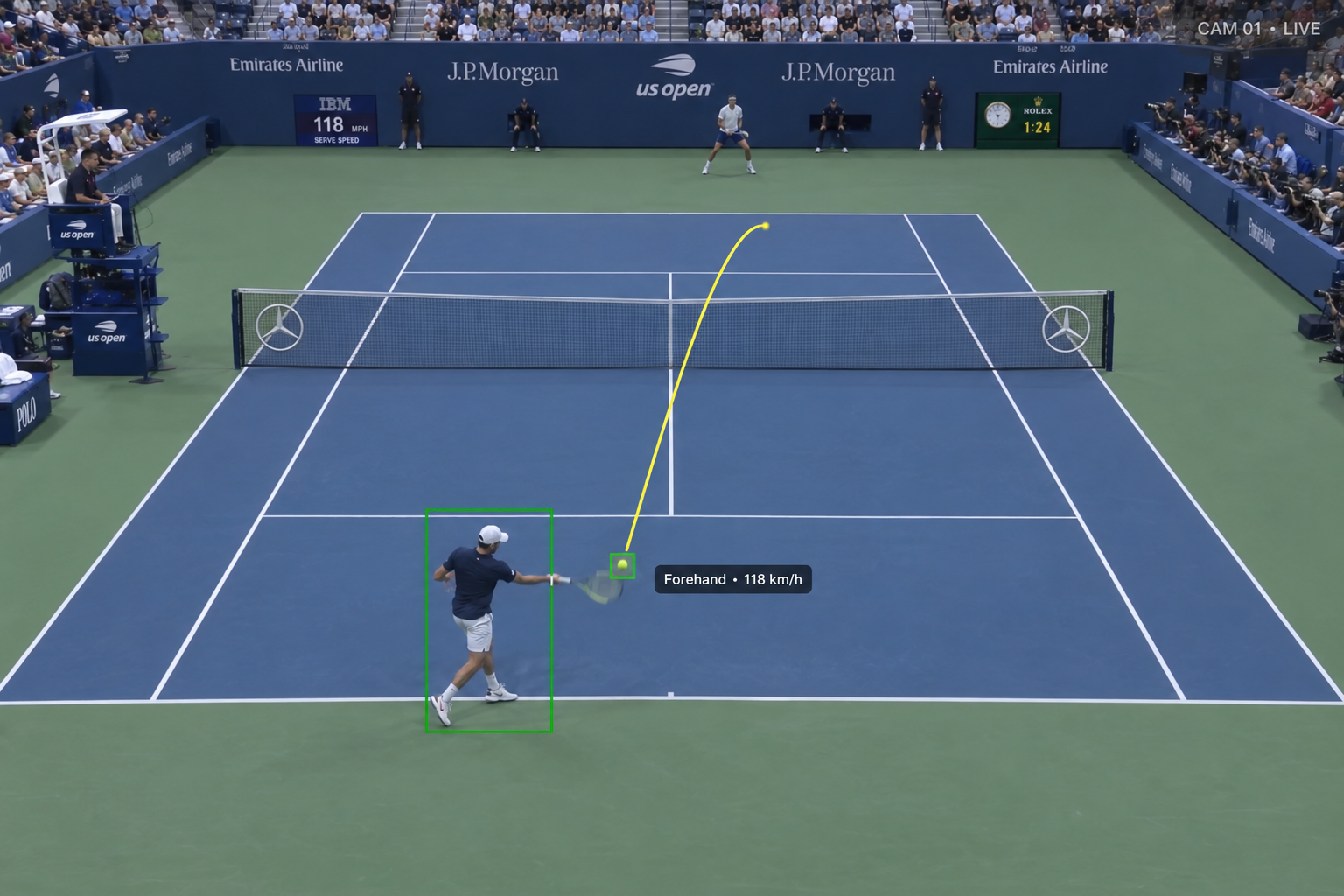
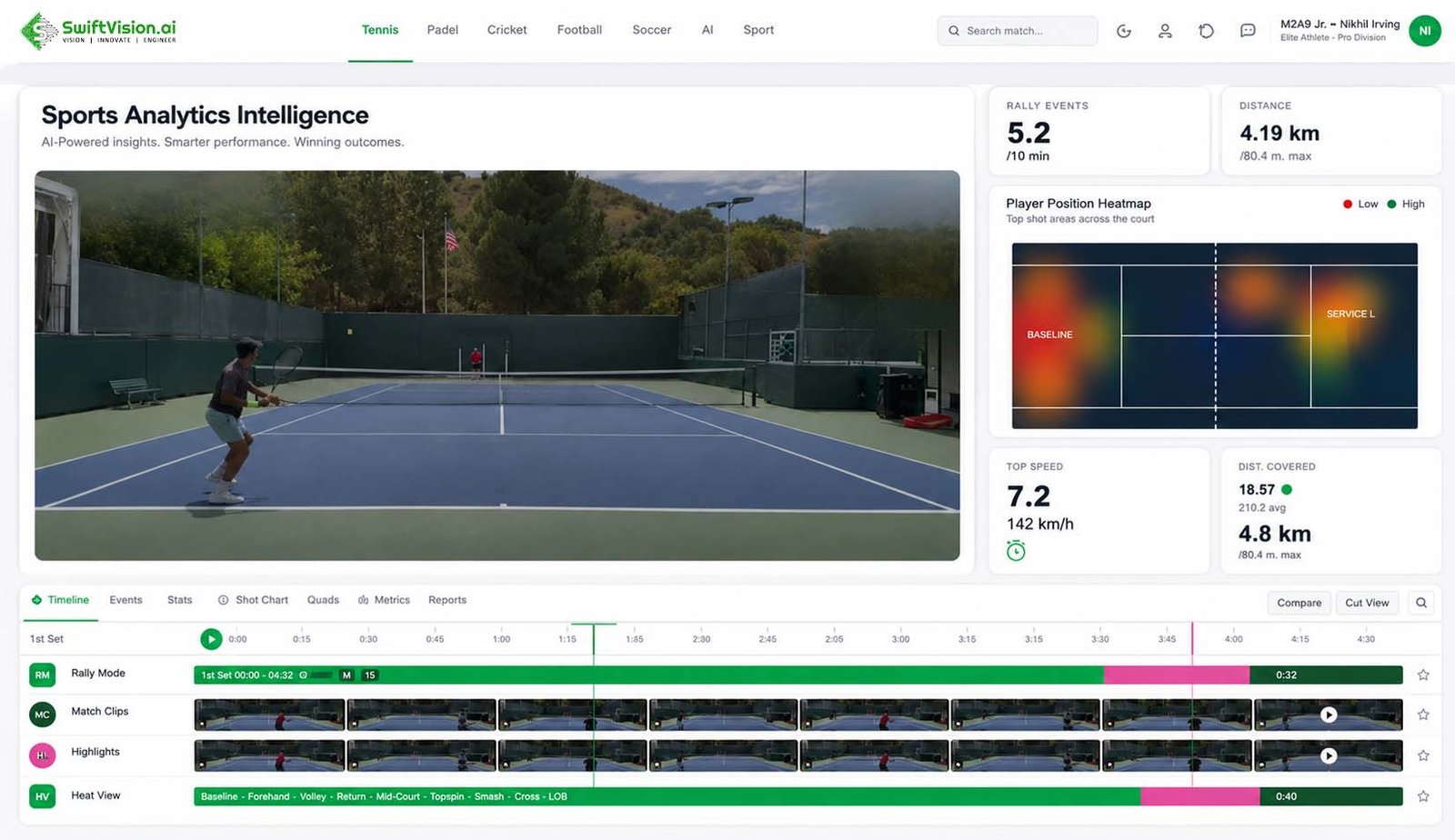
From there the system reads the game itself. The serve starts a rally, the ball landing or going out ends it, and the side that wins the point is recorded. Player positions at the moment of serve show each team's rotation, so every point is tied to a line-up. Our volleyball demos show rally and rotation tracking and court coverage from real footage.
03 · Key stats
Which volleyball stats should coaches track?
Sideout % is the share of rallies a team wins when it receives serve. Point-scoring %, sometimes called break-point %, is the share it wins when serving. Add rally length, serve outcomes and first-ball sideout, which is winning the point on the first attack after serve receive, and you have the core of a strong volleyball stats report.
- 6Rotations to compare for each team, every set
- 2Core numbers: sideout % and point-scoring %
- 1Elevated camera needed to start collecting them
04 · Setup
How do you get started with AI volleyball analysis?
Most programs can go from first recording to their first rotation report in a few matches.
-
 Step 01
Place the camera
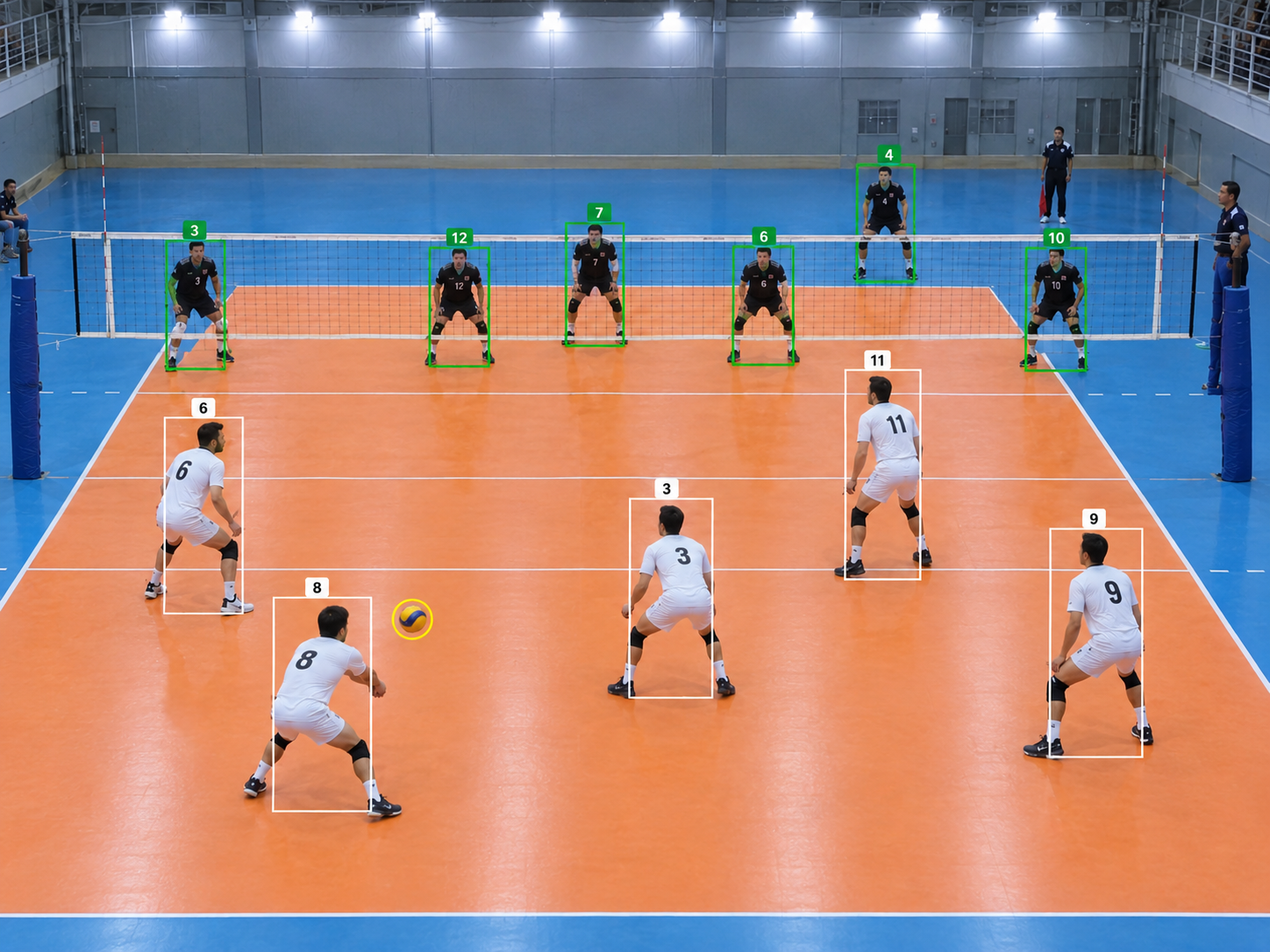
Mount a phone or camera high and centred behind one end line, with all court lines and the net in view.
-
 Step 02
Track every rally
The AI follows all 12 players and the ball, and finds where each rally starts and ends.
-
 Step 03
Read the report
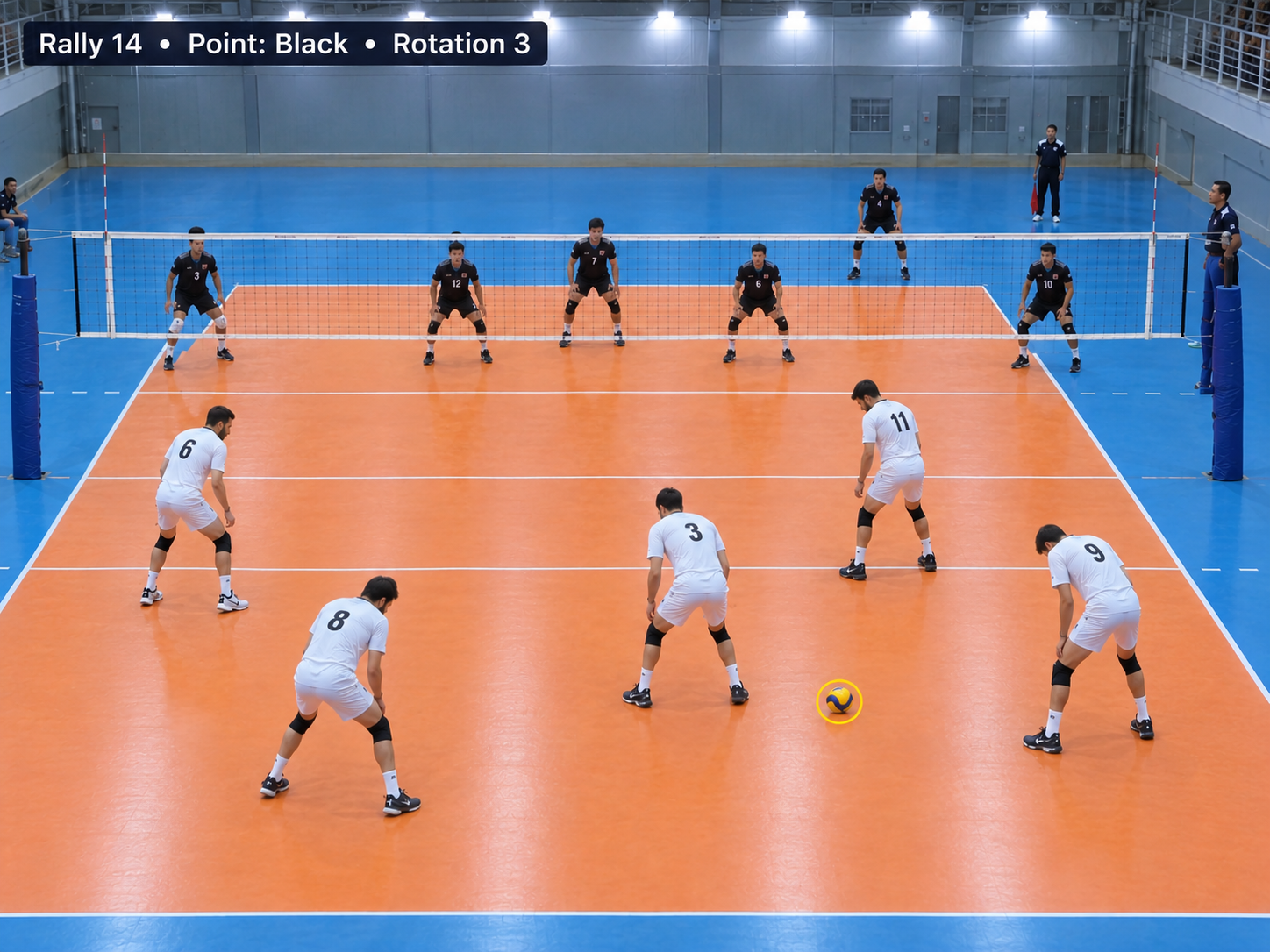
Every rally is logged with its length, winner and the rotation each team was in.
-
 Step 04
Plan practice
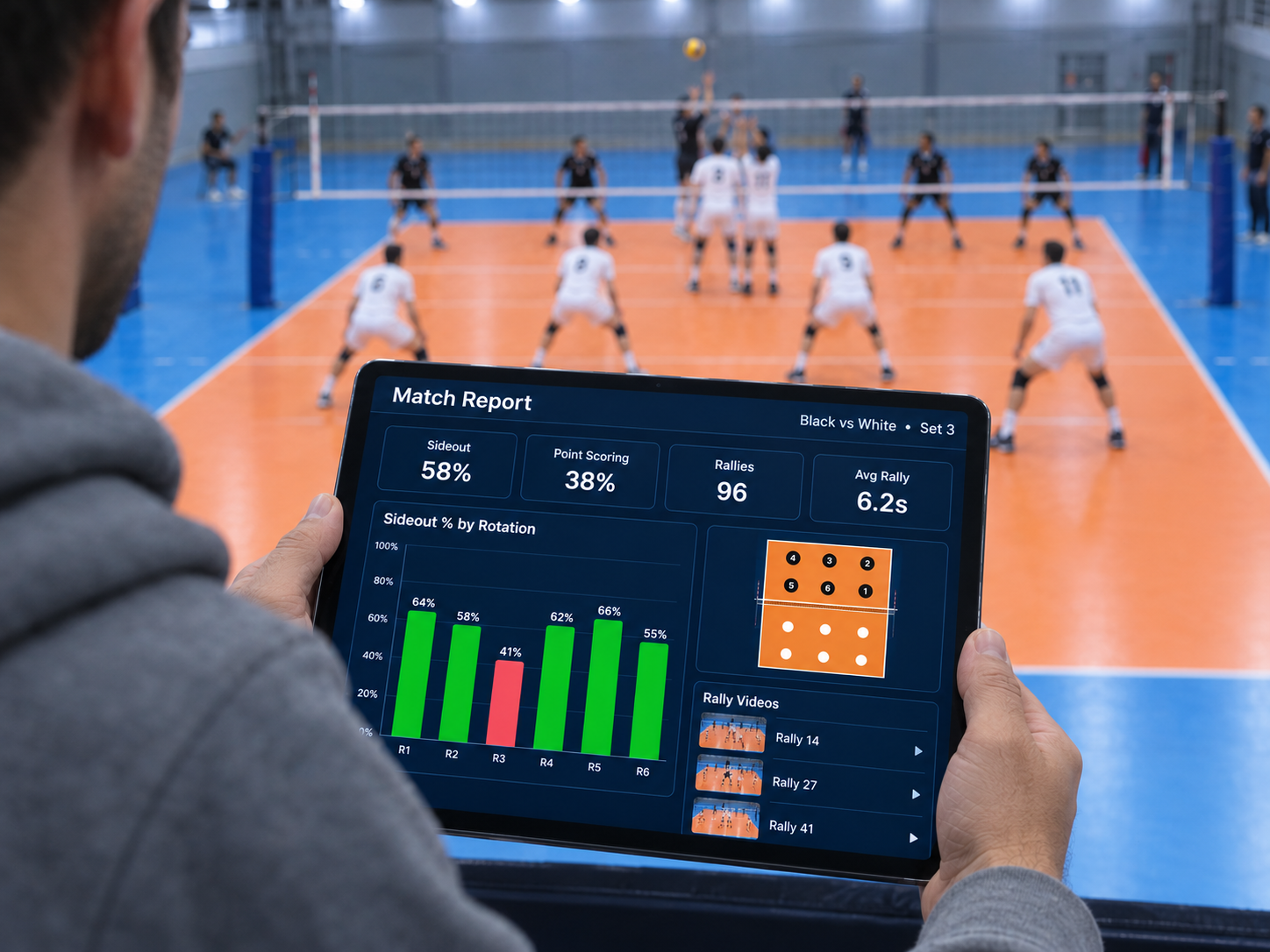
Use the rotation table and rally clips to decide what the next practice should fix.
05 · Coaching playbook
What should you change when one rotation keeps losing points?
A weak rotation usually has a clear cause. Work through these checks in order.
- Check serve receive first: if passing is poor in that rotation, change the receive formation or who takes the serve.
- Count attacking options: with the setter in the front row there are only two front-row hitters, so add a back-row attack.
- Look at where opponents serve: many teams target the same passer every time a weak rotation comes round.
- Review the setter's run: a long run from the back row can delay the first attack.
- Train that rotation in practice: use game-like drills, then check the number again after the next match.
06 · Comparison
Hand-coded stats vs AI volleyball video analysis
Hand-coded stats are still common in volleyball. Here is what changes when the video does the tracking.
| Task | Hand-coded stats | AI video analysis |
|---|---|---|
| Rally logging | A stats assistant on every match | Every rally detected automatically |
| Rotations | Tracked by hand and easy to lose | Read from positions at the serve |
| Sideout by rotation | Worked out after the match | Ready in the match report |
| Rally clips | Cut and tagged by hand | Every rally clipped and tagged |
| Consistency | Varies by person | Same rules every match |
07 · By level
What should you track at each level?
Start with the basics and add detail as your program grows. Teams in other sports use the same approach, as in our tennis rally analysis.
-
High school
Sideout % by rotation and rally clips for film sessions.
-
Club & youth
Rotation reports, serve outcomes and court coverage.
-
College & pro
Opponent scouting, serve targets and detailed rally data.
08 · FAQ
Frequently asked questions
What is a good sideout percentage in volleyball?
It depends on the level, but many coaches treat a sideout rate of around 60% or higher as strong in competitive play, and a rate well below 50% as a sign the serve-receive game needs work. Compare your numbers with teams in your own league.
What is the difference between sideout and point scoring?
A sideout is winning a rally when the other team serves, which also wins back the serve. Point scoring, or a break point, is winning a rally on your own serve. Strong teams side out reliably and score enough break points to pull away.
How does AI know which rotation a team is in?
It looks at where each player stands at the moment of serve and their order on court. Because the order is fixed between serves, the AI can follow the rotation through the whole set.
Can AI volleyball analysis replace a stats assistant?
It can take over rally, point and rotation tracking, which is most of the routine work. Many coaches still add their own grades, such as pass ratings, on top of the automatic data.
Can we use footage from our streaming camera?
Yes, if it shows the whole court from a fixed, elevated position. Zoomed or panning footage loses players off screen, which makes rotation and position data less reliable.
Does it work for beach volleyball?
The same approach can be adapted for beach volleyball, with two players per side and models trained on beach footage and court markings.

For volleyball coaching staff
Get rotation stats for your next match
Book a 30-minute call. We'll look at your gym setup and show how rally and rotation tracking fits your coaching staff.