AI Table Tennis Umpire:
How Automatic Scoring Calls Every Point
An AI table tennis umpire watches the ball, the table and the net, and keeps score without anyone at the scoring table. This guide explains how it decides each point, which rules it can call reliably and which ones are still hard, the phone setup it needs, and where clubs, leagues and venues use it today.
01 · The question
Can AI really umpire a table tennis match?
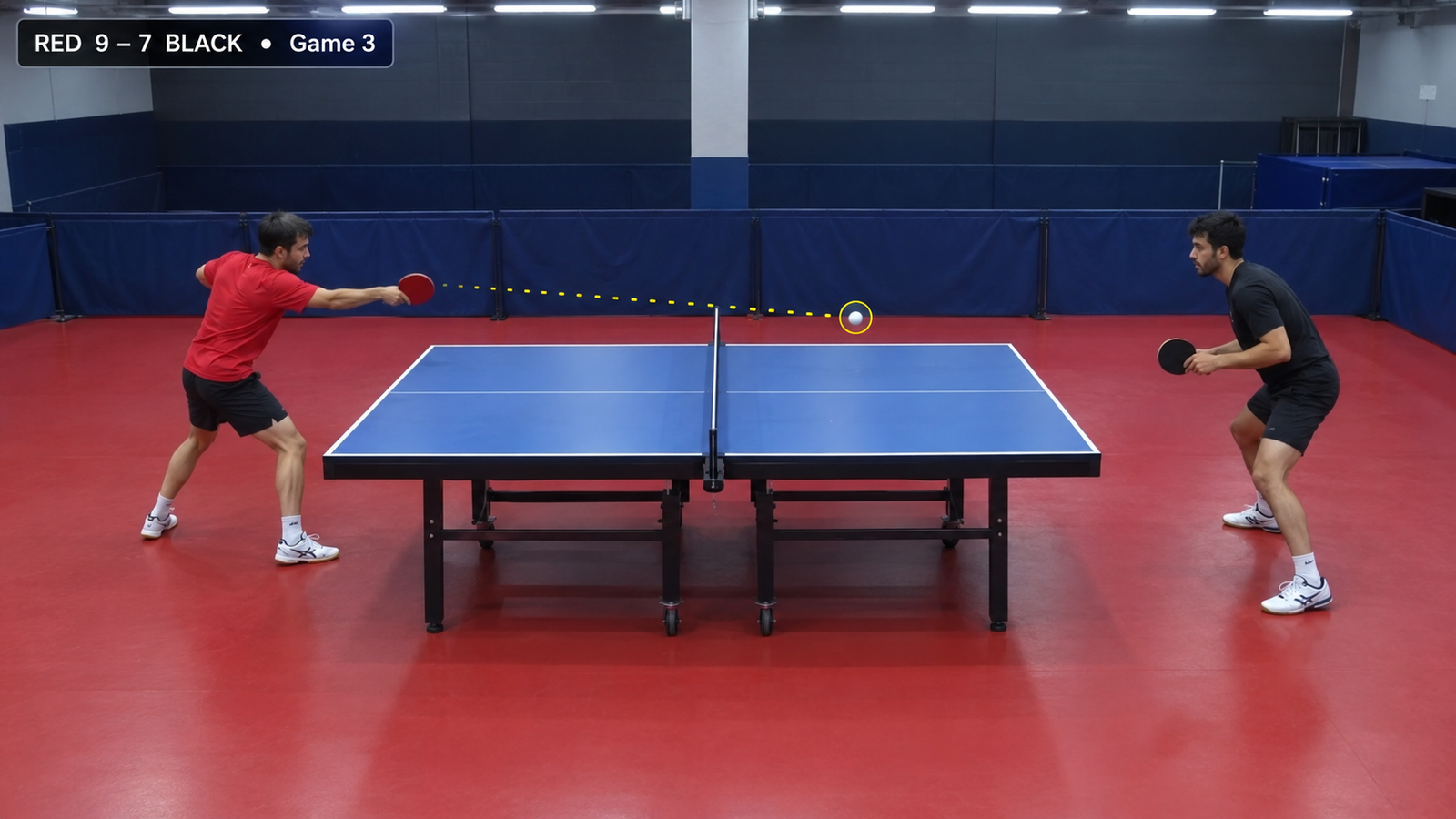
An umpire in table tennis does four jobs: keeps the score, tracks who serves, calls lets and judges faults. An AI table tennis umpire takes over the first three almost completely and helps with the fourth, using nothing but a smartphone and software. Our own table tennis demo works as an automatic referee: it tracks the ball through each rally and keeps the score on its own.
That matters most where there is no umpire at all. Club nights, league matches, training sessions and pay-to-play venues usually rely on the players to count, which leads to disputes and lost scores. Automatic scoring removes that. For sanctioned competitions, the officiating rules of the International Table Tennis Federation (ITTF) and national federations still apply, so the AI acts as a scoring and review tool there. It is built on the same ball tracking software we use across other racket sports.
02 · How it sees
How does an AI table tennis umpire follow the ball?
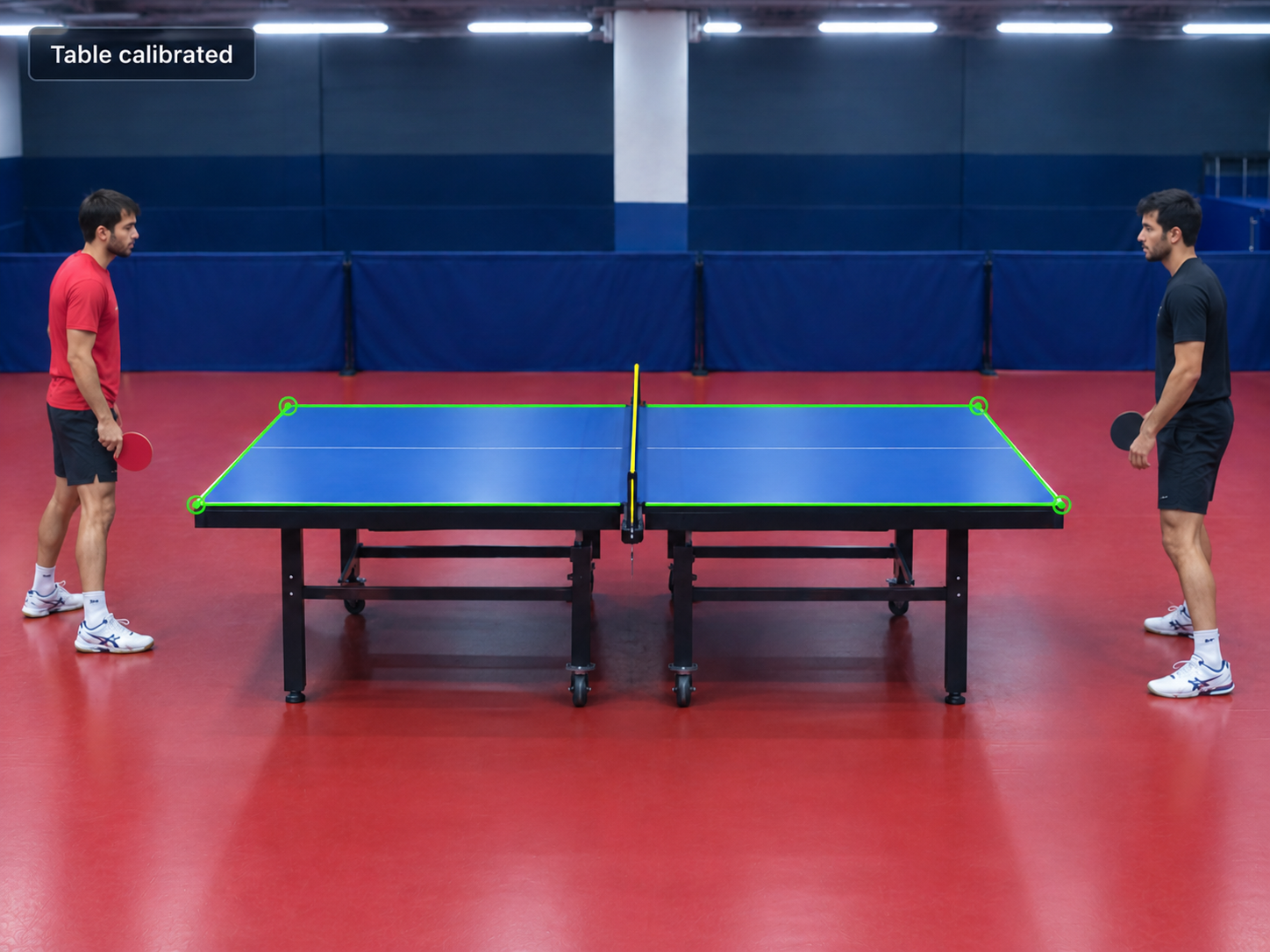
The table is located first. The system finds the four table corners and the net once, which turns the camera image into a precise map of the playing surface and both halves of the table.
Then a ball tracking model follows the 40 mm ball frame by frame, even when it is blurred at high speed. A bounce shows up as a sudden change in the ball's vertical direction at table height, and the table map says which side it landed on. Player positions tell the system who served and who hit last. The same ideas power our tennis ball tracking, tuned here for a much smaller court and a much faster rally.
03 · What it records
What does automatic table tennis scoring record?
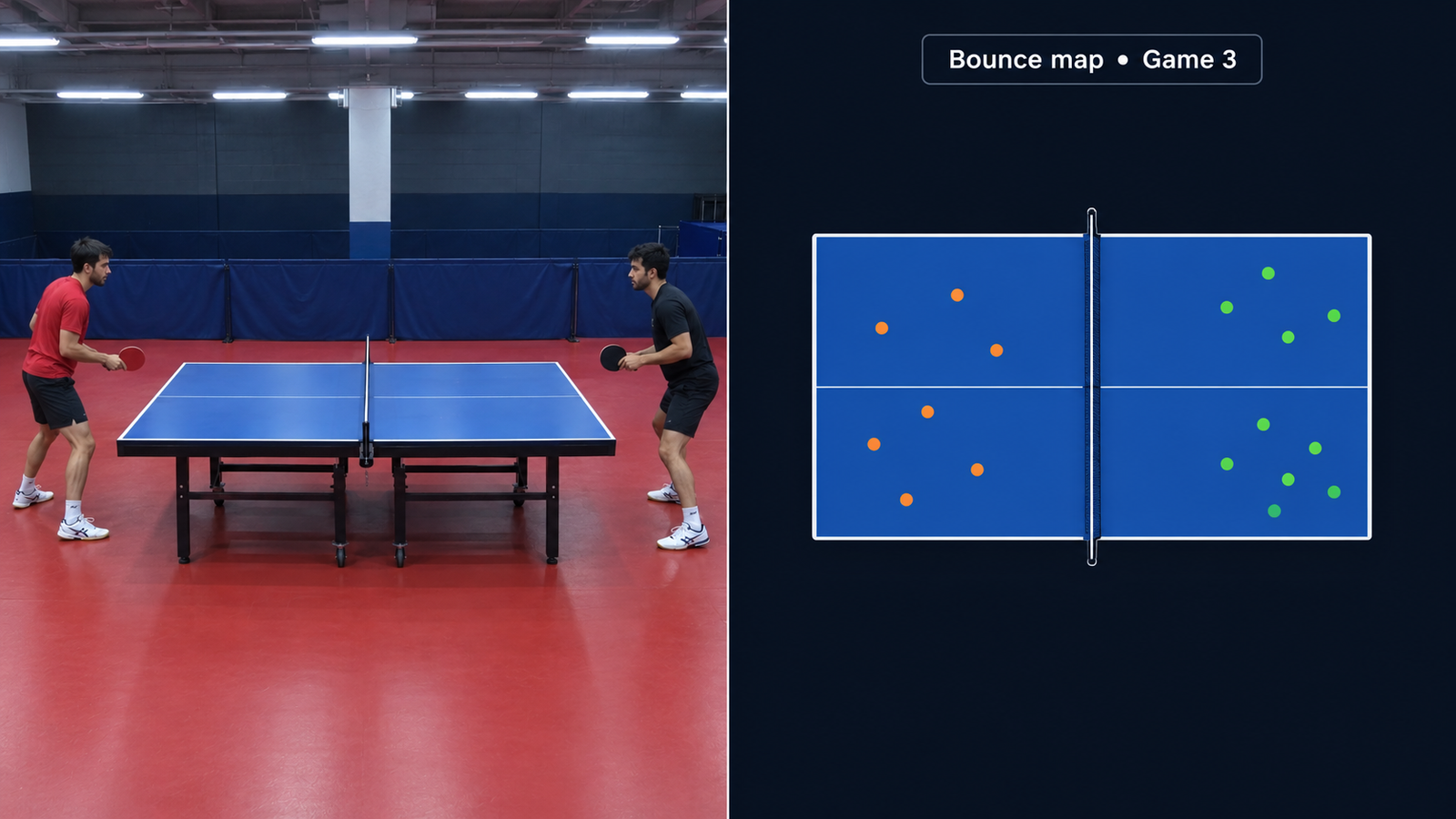
Beyond the score, an AI table tennis umpire turns every match into useful data: serve order and deuce serving, rally length, bounce placement on both halves of the table, points won on serve and on receive, and an estimated ball speed for each shot. Coaches use the bounce map to see where a player's serves and returns really land.
- 40 mmBall size the AI tracks, often at very high speed
- 11Points per game, with win-by-two and deuce serving built in
- 60+ fpsPhone frame rate needed for reliable bounce detection
04 · Setup
From phone to live scoreboard in four steps
A typical setup at a club table, from mounting the phone to showing the live score.
-
 Step 01
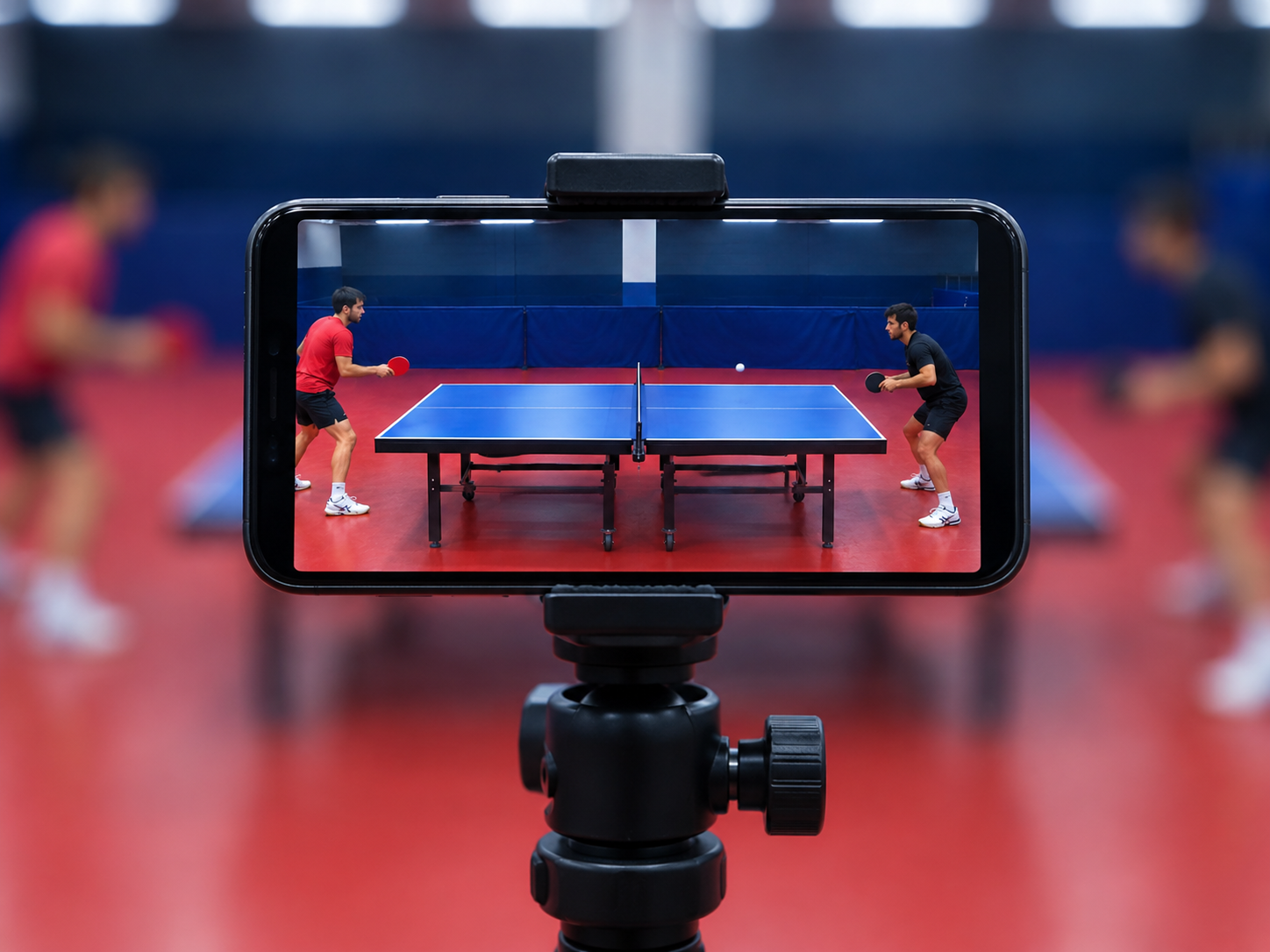
Mount the phone
Fix a smartphone in landscape mode beside the table at net height or slightly above, with the whole table and net in view.
-
 Step 02
Calibrate the table
The system marks the table edges and the net once, so it knows both halves of the table exactly.
-
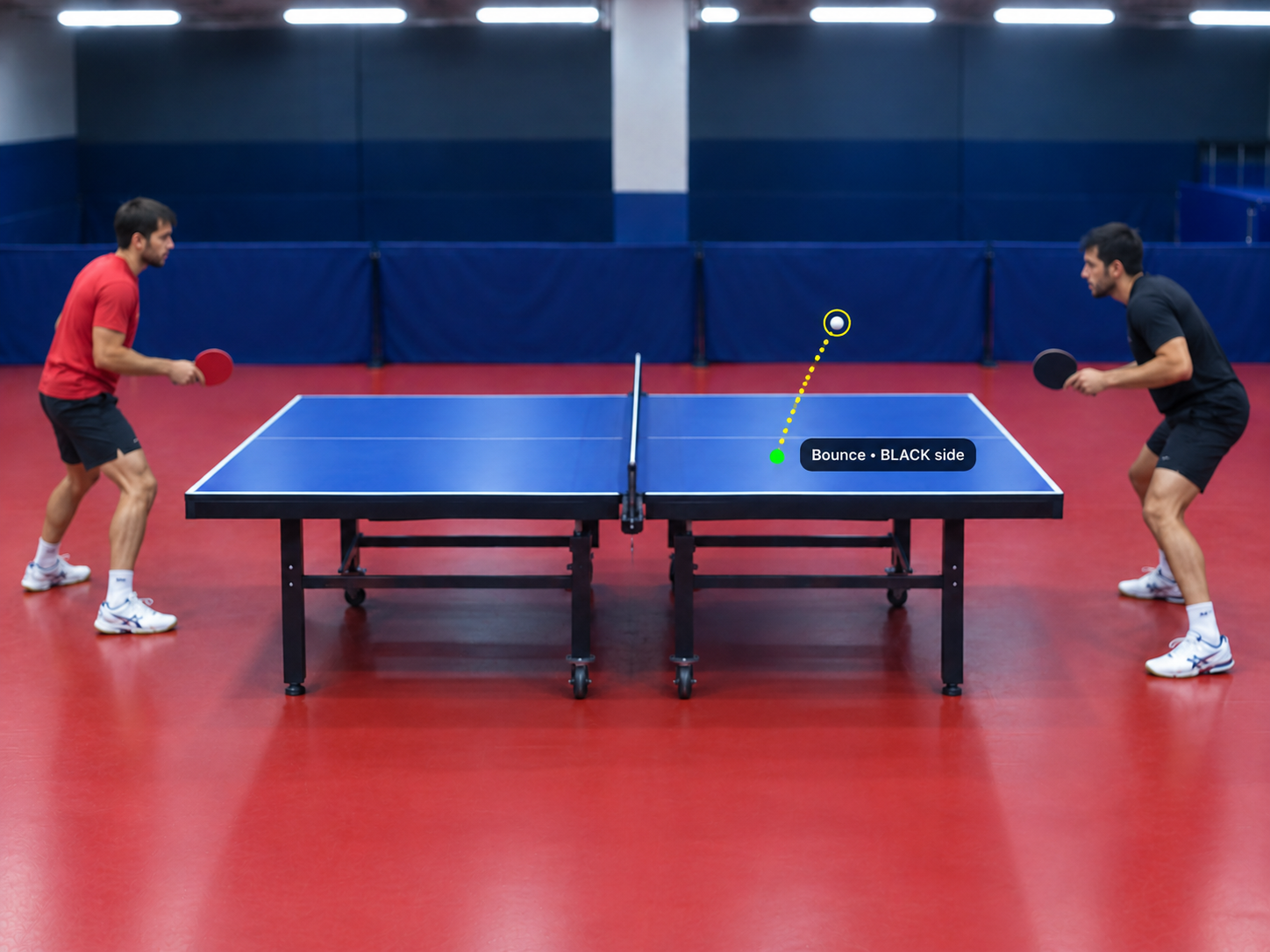 Step 03
Track every bounce
The ball is followed through each rally and every bounce is placed on the correct side of the net.
-
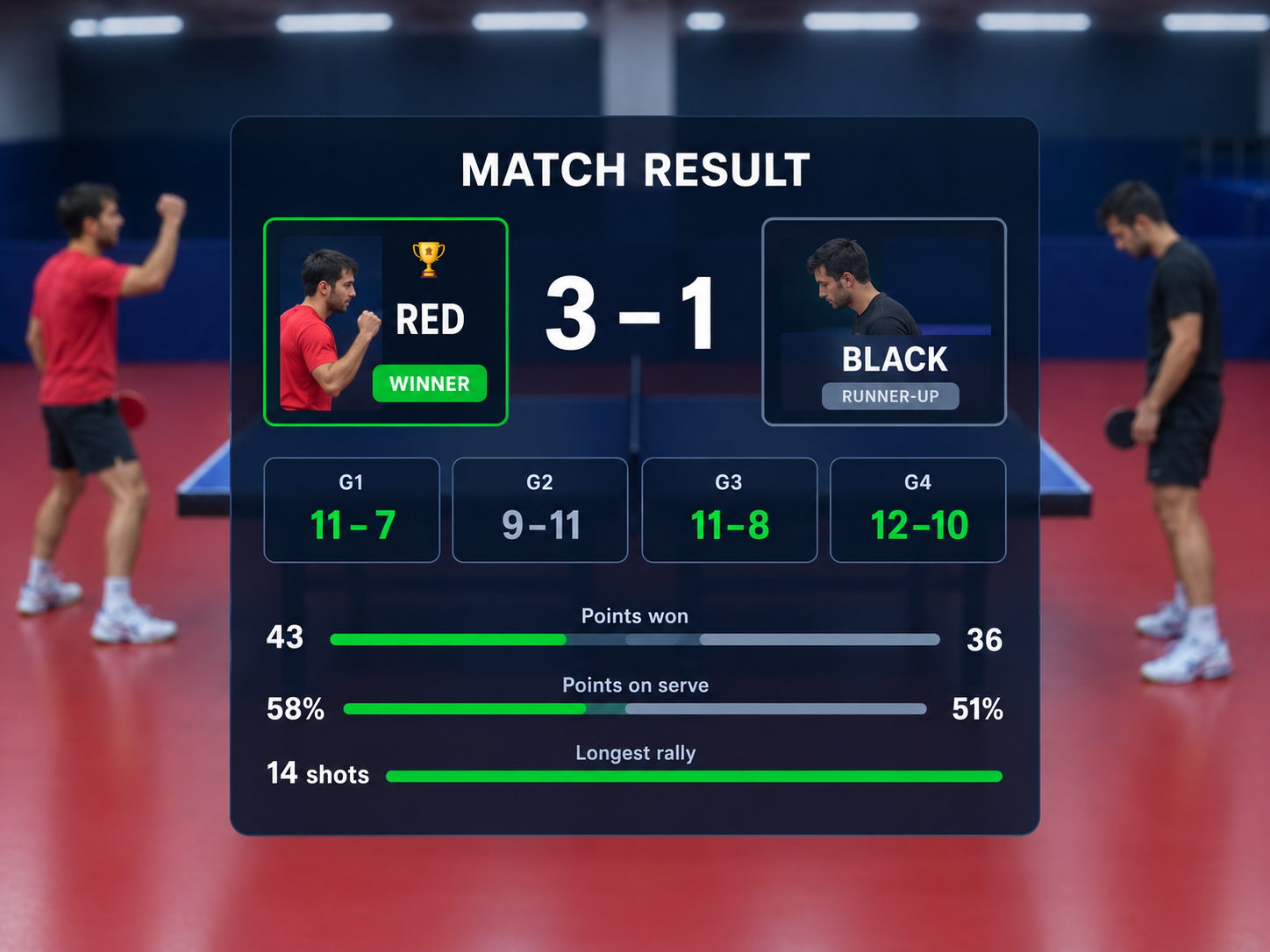 Step 04
Show the result
The score updates live during play, and the app shows the winner, game scores and match stats when the match ends.
05 · Rule by rule
Which rules can an AI umpire call reliably?
Not every call is equally easy for an AI table tennis umpire. Here is an honest breakdown.
- Reliable: ball missing the table, a second bounce on the same side, and the ball hitting the net and not crossing.
- Reliable: score keeping, serve changes every two points, single-point serving from 10-10, and the end of each game.
- Needs a clear view: lets on serve, where the ball clips the net and still lands in, and very fast net-cord returns.
- Hardest: edge balls, where the ball touches the top edge (a good ball) or the side (not good). A close, side-on camera helps most.
- Partly possible: service faults such as toss height. The system can estimate them, but hidden serves are hard to judge from any single angle.
06 · Decision table
How does the AI decide each point?
Each point is decided by matching what the camera saw against the rule for that situation.
| Situation | What the rule says | What the AI checks |
|---|---|---|
| Ball misses the table | Point to the hitter's opponent | No bounce found on the far half |
| Double bounce | Point to the player who hit last | Two bounces on the same half |
| Let on serve | Serve is replayed | Net contact on the serve, then a good bounce |
| Serve order | Change every 2 points, every point from 10-10 | Score and server tracked together |
| Game end | First to 11, win by 2 | Score checked after every point |
07 · Who uses it
Who uses AI table tennis scoring?
Automatic scoring fits three very different groups. We also build custom AI sports apps around it.
-
Clubs & training centres
Hands-free scoring and rally clips on every table.
-
Leagues & amateur events
Fewer score disputes and results recorded automatically.
-
Table tennis product makers
Auto-scoring built into smart tables, robots or apps.
08 · FAQ
Frequently asked questions
Can an AI umpire replace a human umpire in table tennis?
For practice, club nights, leagues and amateur events, an AI umpire can handle the scoring and serve order on its own. In sanctioned competitions, the federation's rules on officials still apply, so AI works there as a scoring and video review aid rather than a replacement.
How does AI detect an edge ball in table tennis?
It checks where the ball touched the table: a touch on the top edge is a good ball, a touch on the side is not. This needs a clear, close view of the table edge from the side, and the system can flag unclear cases for a person to review.
What phone or camera do you need for automatic table tennis scoring?
A modern smartphone that records at 60 frames per second or more is enough. Mount it in landscape mode beside the table at net height or slightly above, with the whole table and net in view. Even lighting without strong glare on the table helps the ball tracking.
Can an AI umpire check service faults?
Partly. It can estimate the height of the toss and whether the serve starts behind the end line. Serves hidden by the body are hard to judge from one camera, which is also true for human umpires.
Can the score be shown live on a screen or in an app?
Yes. The score, the server and the game count can be shown on a TV, tablet or phone app as the match is played, and every rally can be saved as a short clip.
Can automatic scoring be built into our own table tennis product?
Yes. SwiftVision AI builds ball tracking and auto-scoring into custom products, such as smart tables, training robots and coaching apps. We scope the features and hardware on a short call.

Clubs, venues and product teams
Add automatic scoring to your tables
Book a 30-minute call. We'll look at your tables, setup and goals, and show how AI scoring and rally clips would work for you.
-
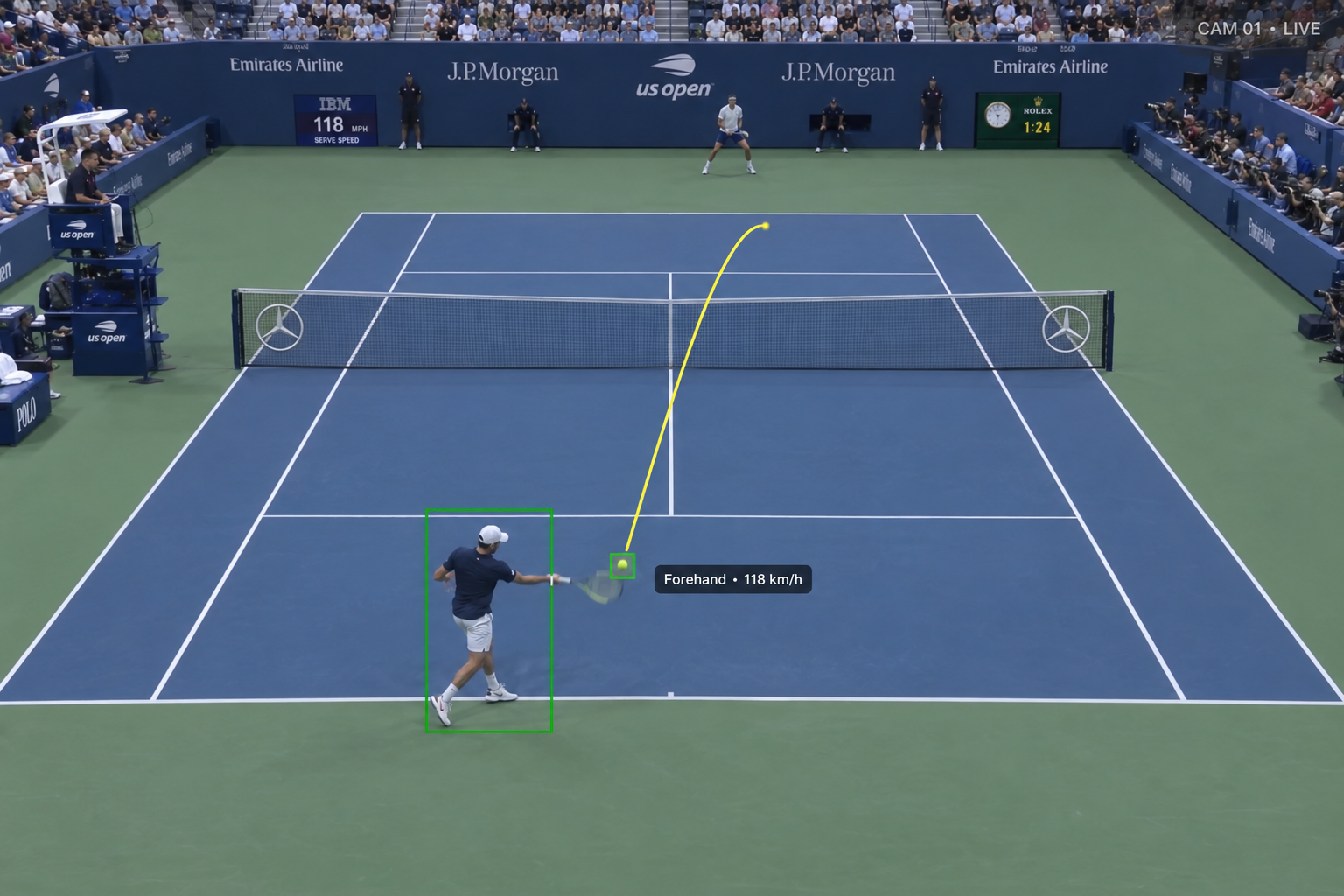
-
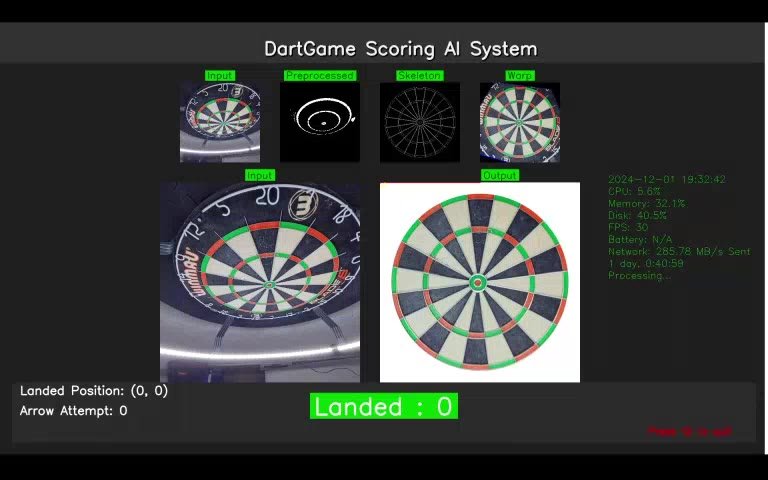
-
 Sports Analytics
Sports AI and Ball Tracking
Ball and player tracking for clubs, venues and broadcasters.
Read