Football Player Tracking:
How AI Measures Every Sprint, Pass and Ball Movement
Football player tracking with AI turns ordinary match video into tracking data for every player and the ball, with no GPS vests or wearables. This guide explains how computer vision follows players, measures sprint speed and distance, and gives coaches the tactical insight that used to take hours of video analysis.
01 · Overview
What is AI football player tracking?
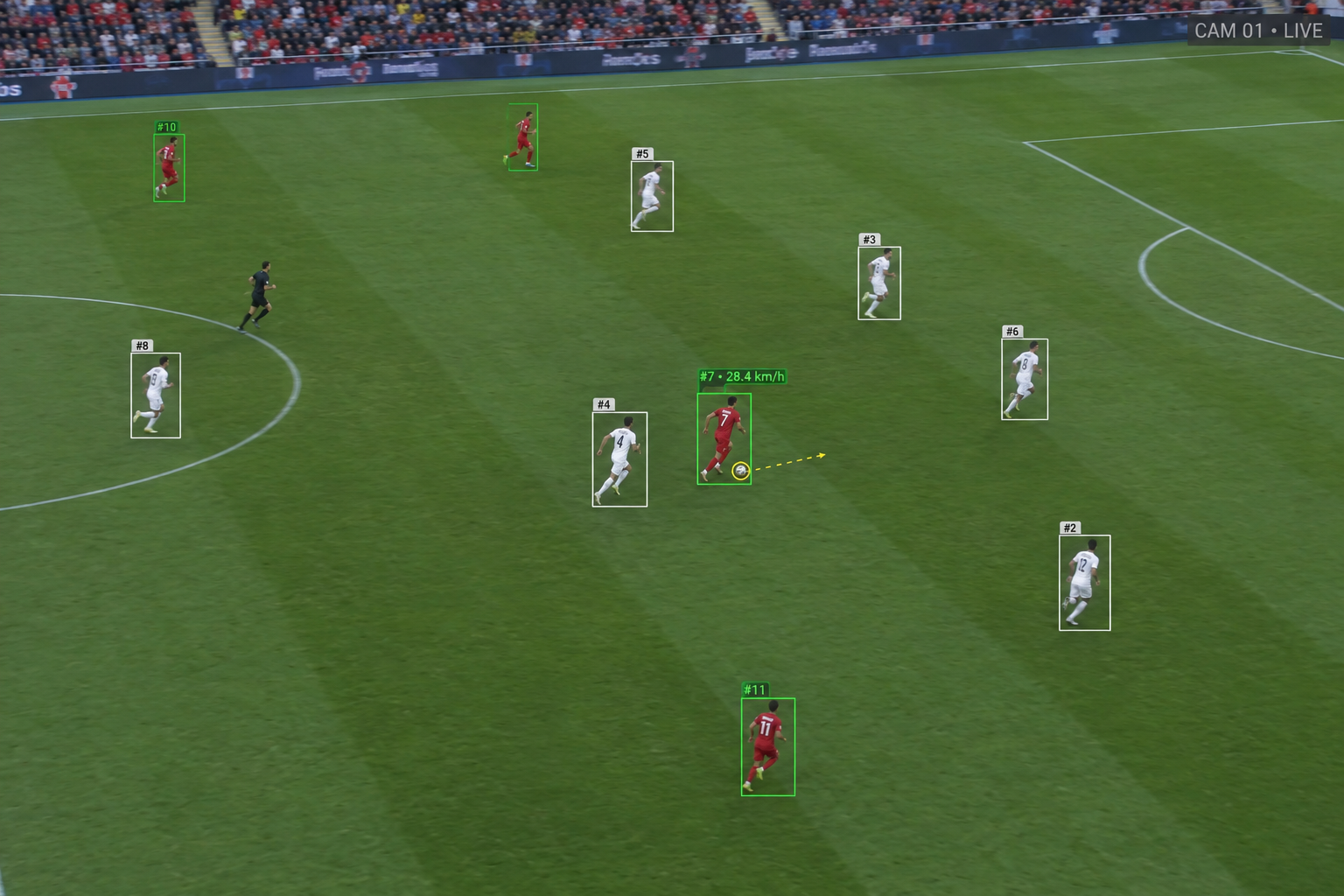
AI football player tracking uses computer vision to find every player, the referee and the ball in match video, follow them frame by frame and turn their movement into data. The result is the same kind of tracking data that elite clubs use: where each player was, how far and how fast they ran, and how the ball moved between them.
Until recently, football tracking data came from GPS vests or expensive multi-camera stadium systems. Vests only measure your own players and say nothing about the ball, and tagging match video by hand takes analysts hours per game. AI football match analysis software now does this from standard cameras, which puts tracking data within reach of academies, youth clubs and lower-league teams.
02 · Technology
How does computer vision track football players and the ball?
An object detection model finds every player, goalkeeper, referee and the ball in each frame. A multi-object tracking algorithm, such as ByteTrack or DeepSORT, then gives each player an ID and follows that ID through the match. When players cross, collide or disappear behind each other, re-identification uses appearance and kit colour to give them back the right ID. Kit colour also splits players into the two teams automatically.
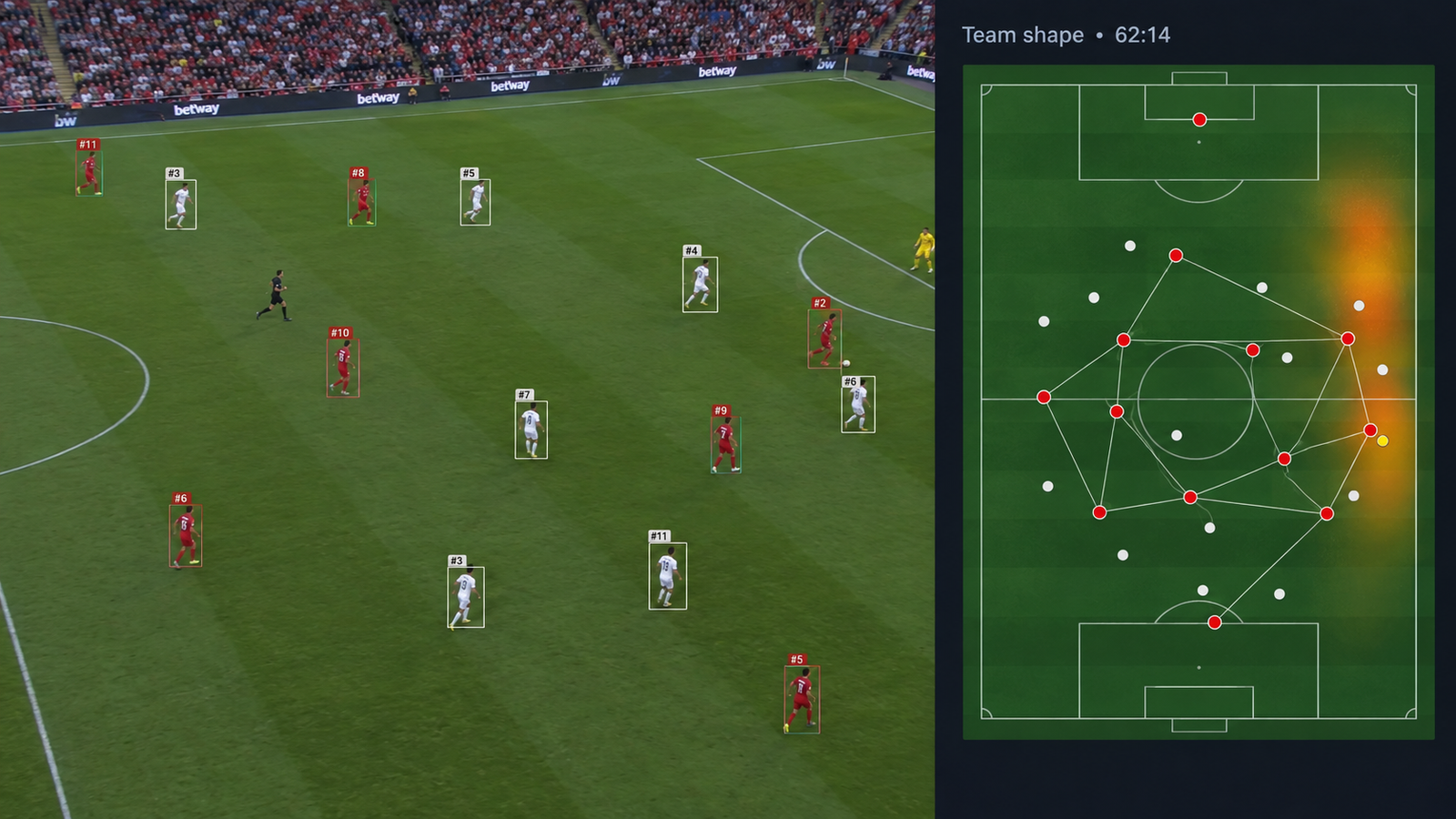
Pitch calibration uses the pitch lines to map every pixel to a real position in metres, so the system can measure distance covered, sprint speed and positions on a 2D tactical view. The ball is the hardest object to follow because it is small, fast and often hidden, so a dedicated ball tracking model fills short gaps in its path. The same ball tracking approach powers our AI tennis swing analysis.
03 · Impact
What results can AI football tracking deliver?
Video tracking covers every player on the pitch and removes most of the manual tagging work. See more in our sports case studies.
- 22+1All 22 players and the ball tracked in every frame
- 0GPS vests or wearables needed for any player
- 90%Less manual video review at an academy using our tracking
04 · Process
How does AI football player tracking work?
From one match recording to tactical reports in four steps.
-
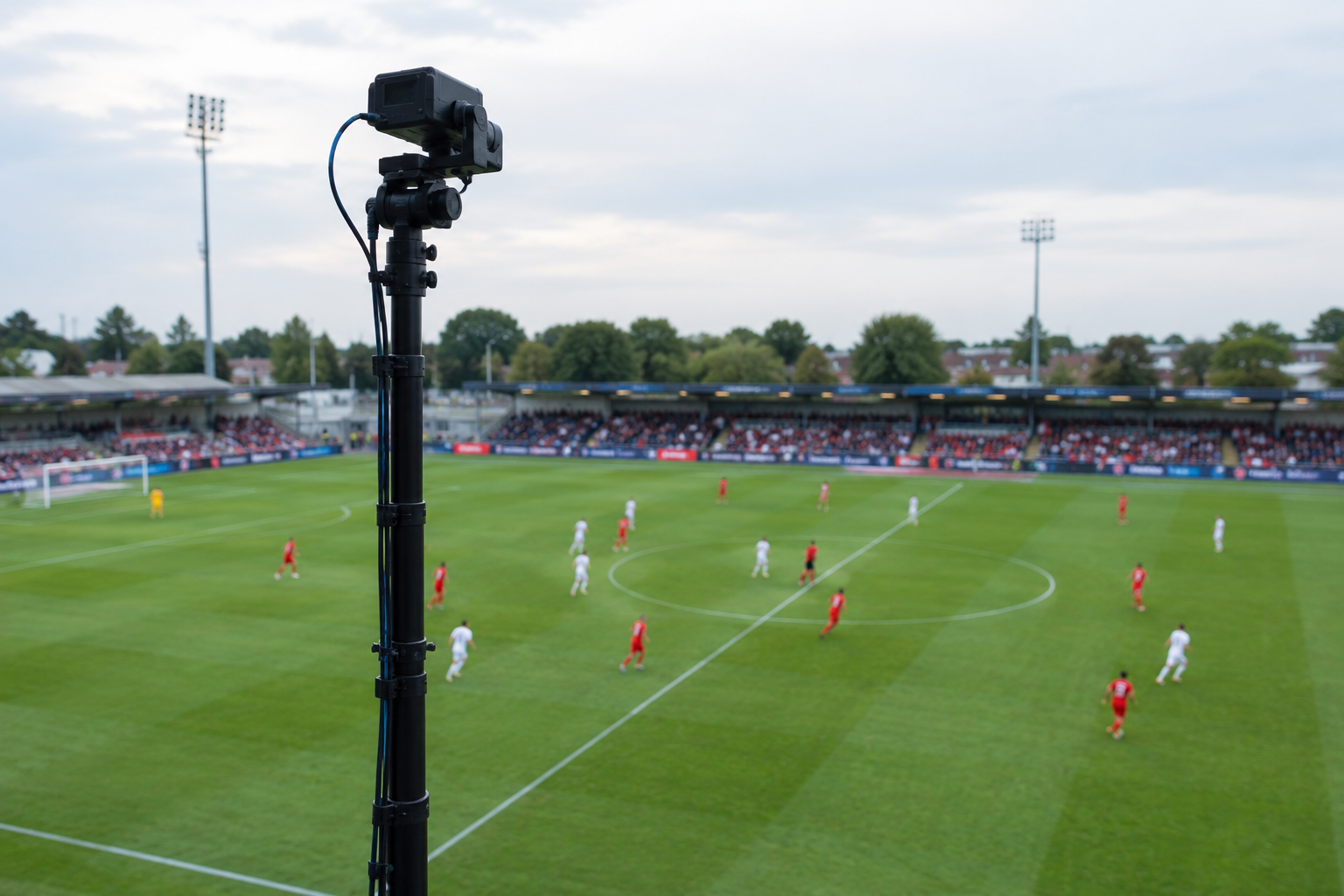 Step 01
Record
A wide camera on a tall tripod or stand at the halfway line records the whole pitch. Players wear nothing extra.
-
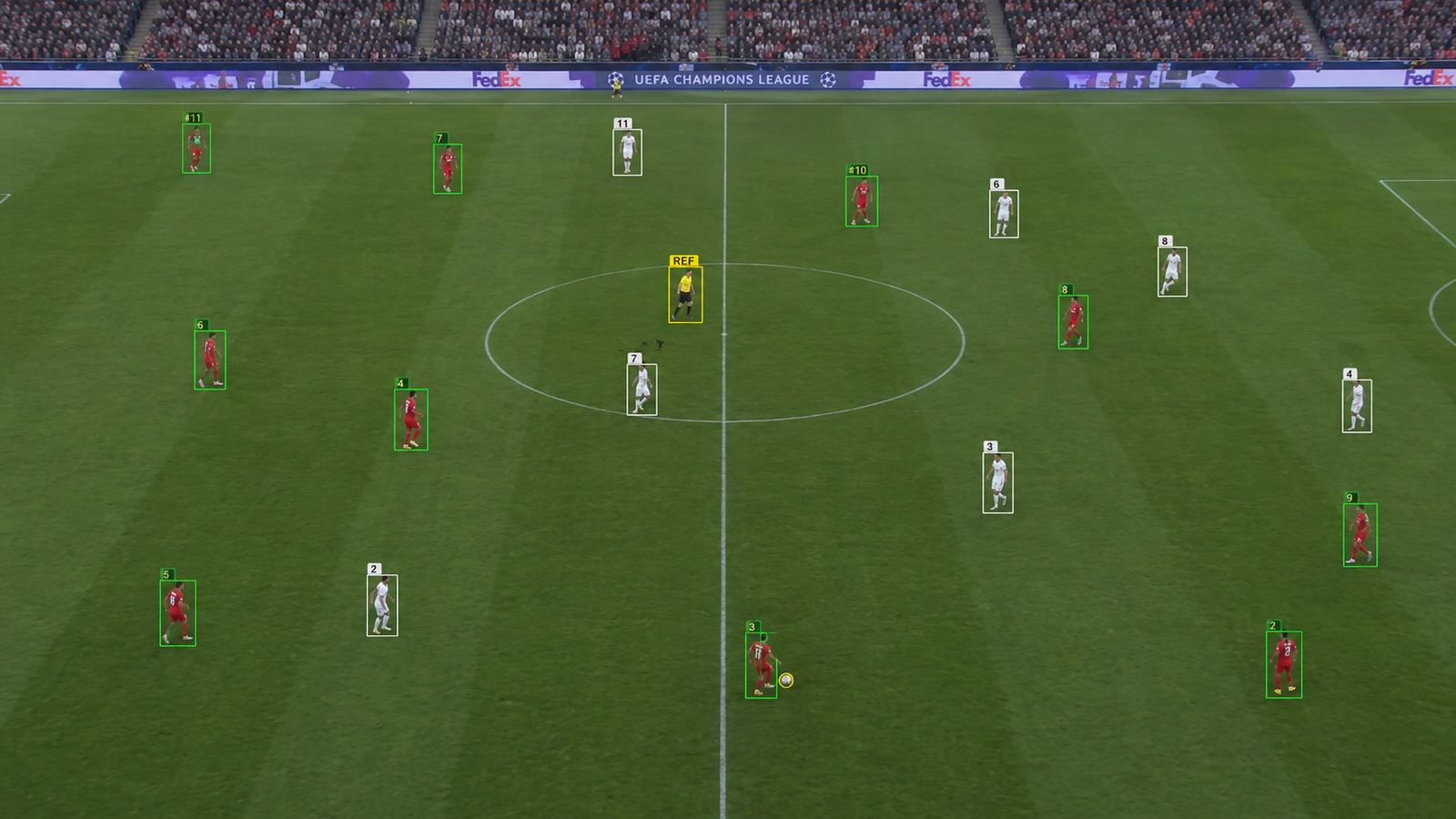 Step 02
Track
AI detects every player, the referee and the ball, gives each player an ID and follows them frame by frame.
-
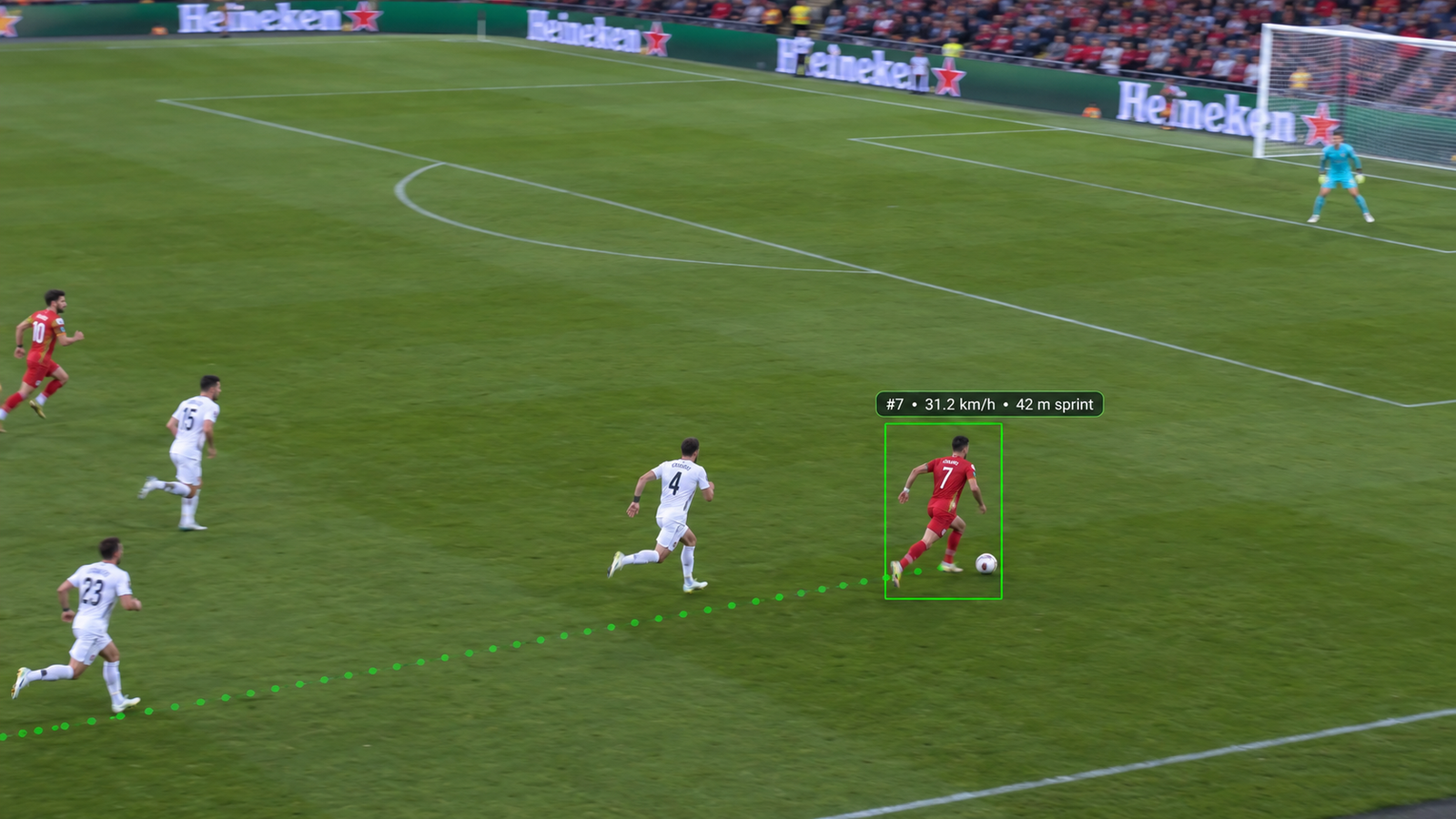 Step 03
Analyze
Positions are mapped onto a 2D pitch to measure distance, sprint speed, heatmaps and passing links.
-
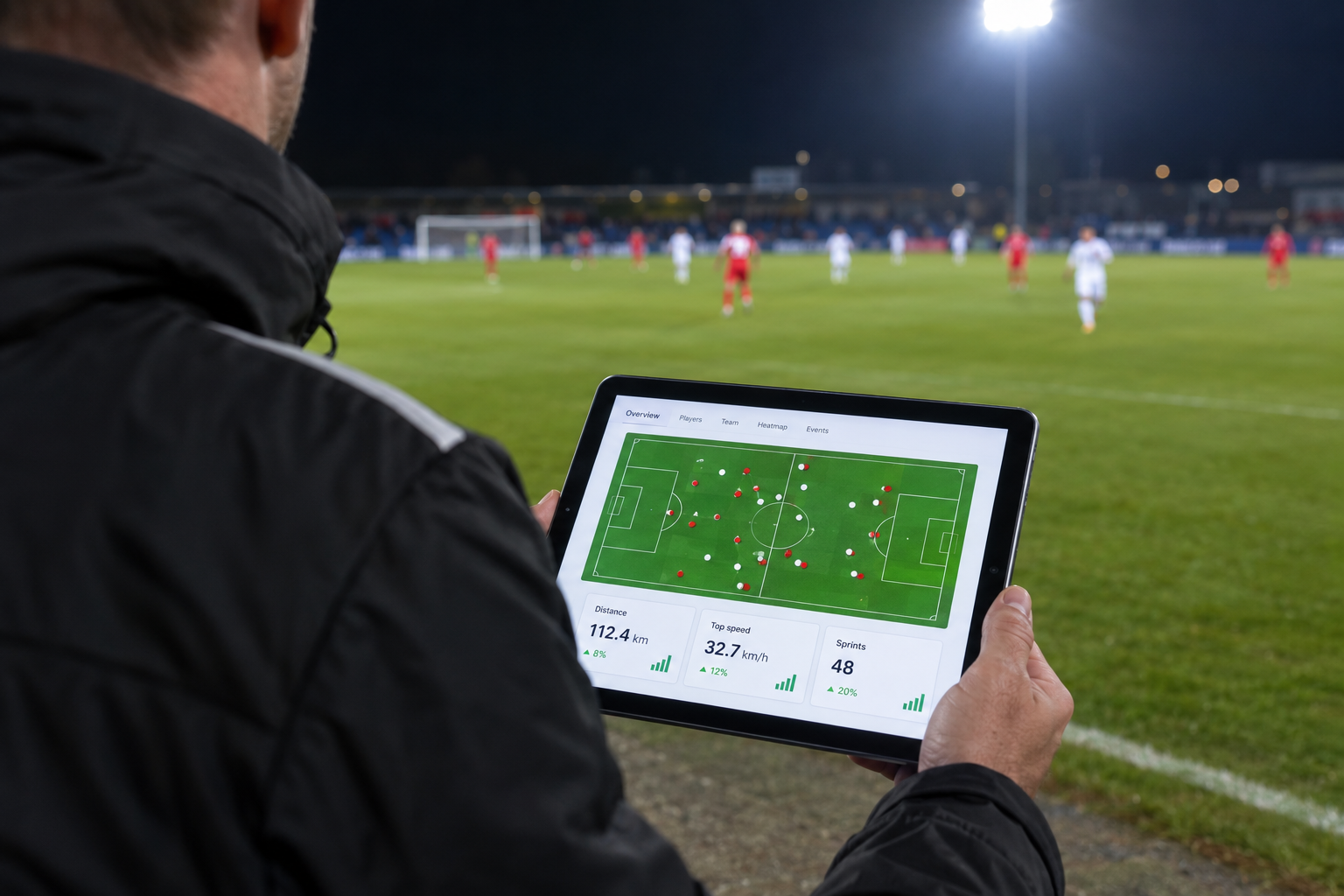 Step 04
Review
Coaches get tactical views, player reports and automatic highlight clips after the match.
05 · Benefits
What do coaches, analysts and clubs gain?
AI football tracking data changes how a club prepares, trains and reviews matches.
- Tracking data for every player on the pitch, including the opposition.
- Sprint speed and distance covered without fitting GPS vests.
- Heatmaps and team shape for tactical review of pressing and defending.
- Pass networks that show how the team builds play.
- Automatic event clips that save hours of manual video tagging.
06 · Comparison
GPS vests vs AI video tracking
GPS vests and AI video tracking answer different questions. Here is how they compare for football.
| Feature | GPS vests | AI video tracking |
|---|---|---|
| Players covered | Only players wearing a vest | All players on the pitch, both teams |
| Ball data | No ball data | Ball position and trajectory |
| Setup | Vests charged and fitted every session | One camera, nothing to wear |
| Tactical view | Physical data without match context | Positions linked to the ball and play |
| Scaling up | More vests for more players | Same camera for the whole squad |
07 · Applications
Who uses AI football player tracking?
Three groups get the most value from football tracking data. Learn more about our sports analytics and ball tracking software.
-
Academies & clubs
Player reports, heatmaps and match clips for youth and first teams.
-
Leagues & federations
Consistent football tracking data across venues and competitions.
-
Analysts & broadcasters
Tactical graphics and automated highlights within minutes of the match.
08 · FAQ
Frequently asked questions
What data does AI football player tracking provide?
It provides each player's position over time, distance covered, top speed, number of sprints, heatmaps, team shape, pass networks and the ball's trajectory. Event detection adds clips of key moments such as shots, goals and set pieces.
Is video tracking as accurate as GPS vests?
They measure different things. GPS vests give very detailed physical data for the players wearing them. Video tracking covers every player on both teams plus the ball, and links movement to the tactical context of the match. Accuracy depends on camera position and how much of the pitch is in view, and many clubs use both.
How many cameras do you need to track a football match?
One wide camera that sees the whole pitch from a high position is a common starting point. Adding more cameras reduces blind spots in crowded areas, such as the penalty box during corners, and improves accuracy for every player.
Can AI detect offside in football?
AI can estimate player positions relative to the ball at the moment of a pass, which is useful for match analysis and coaching. It is not a certified officiating system. Official offside decisions need calibrated, multi-camera setups approved by the competition.
How does the AI keep track of players when they cross or are blocked?
Multi-object tracking predicts where each player will move next, and re-identification compares appearance and kit colour to give a player back the right ID after they reappear. This keeps player IDs stable through tackles, crowds and camera pans.
Does AI player tracking work for youth and amateur football?
Yes. It works with standard cameras and nothing is attached to the players, so academies and youth clubs can get tracking data and match clips without the cost of GPS vests or a stadium camera system.

Work with SwiftVision AI
Bring AI player tracking to your club or academy
Tell us about your pitches, cameras and teams, and our team will show how football tracking data fits your program.