Padel Analytics:
8 AI Features That Turn a Phone Video Into Match Data
Padel is fast, enclosed in glass and played by four people in a small space, which makes it one of the hardest racket sports to analyse on video. This guide walks through the eight features inside our padel analytics app, from finding the ball to tracking players, cutting highlights and reading the racket, and explains what each one measures, how it works and why it matters to players, coaches and clubs.
01 · The challenge
Why is padel harder to track on video than tennis?
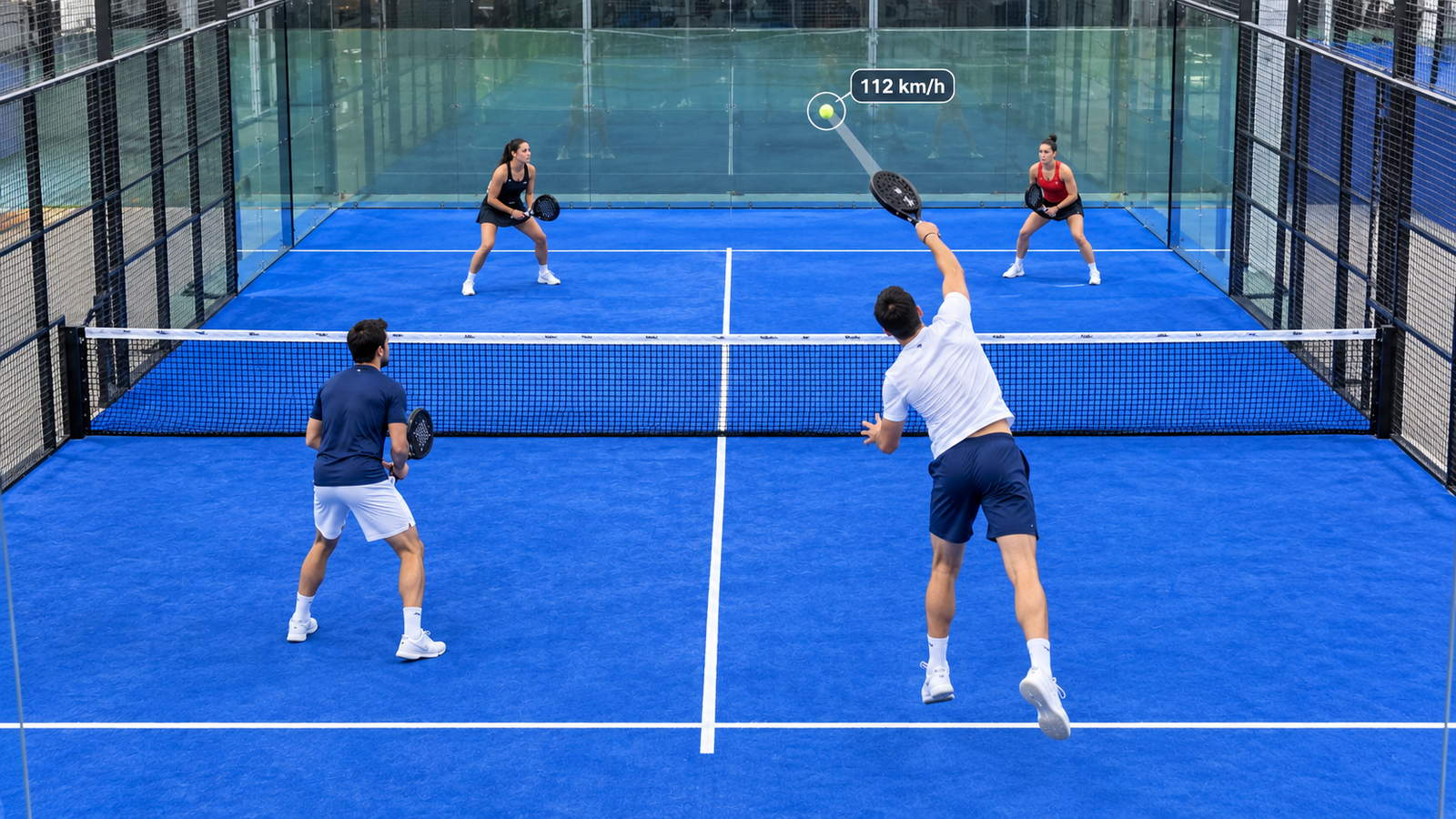
A padel court is only 20 by 10 metres and is closed in by glass and metal mesh. The ball travels fast over a short distance, bounces off the floor and then off the walls, and four players keep stepping between the ball and the camera. Glass adds reflections, and the mesh adds a pattern that can look like a ball to a simple detector.
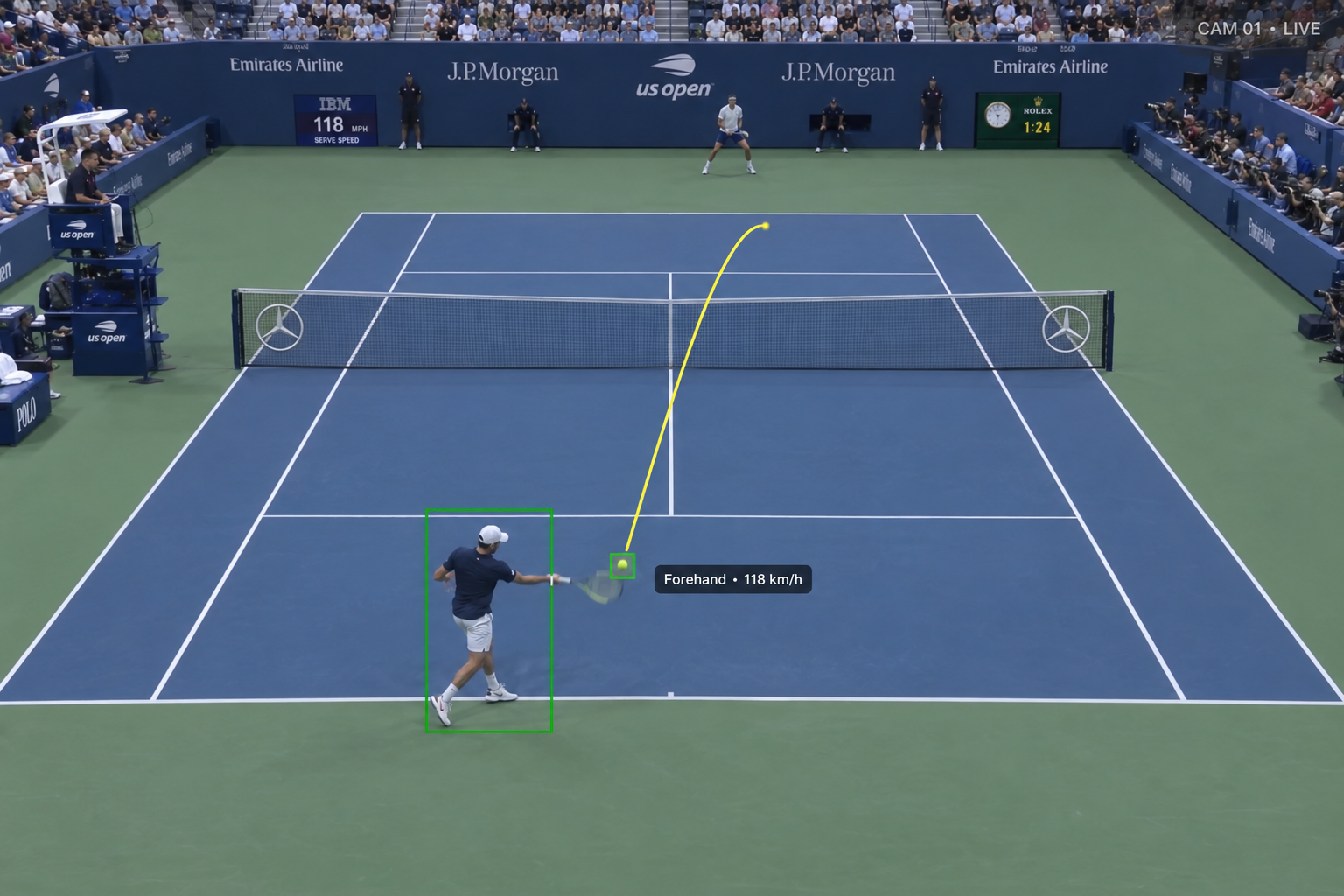
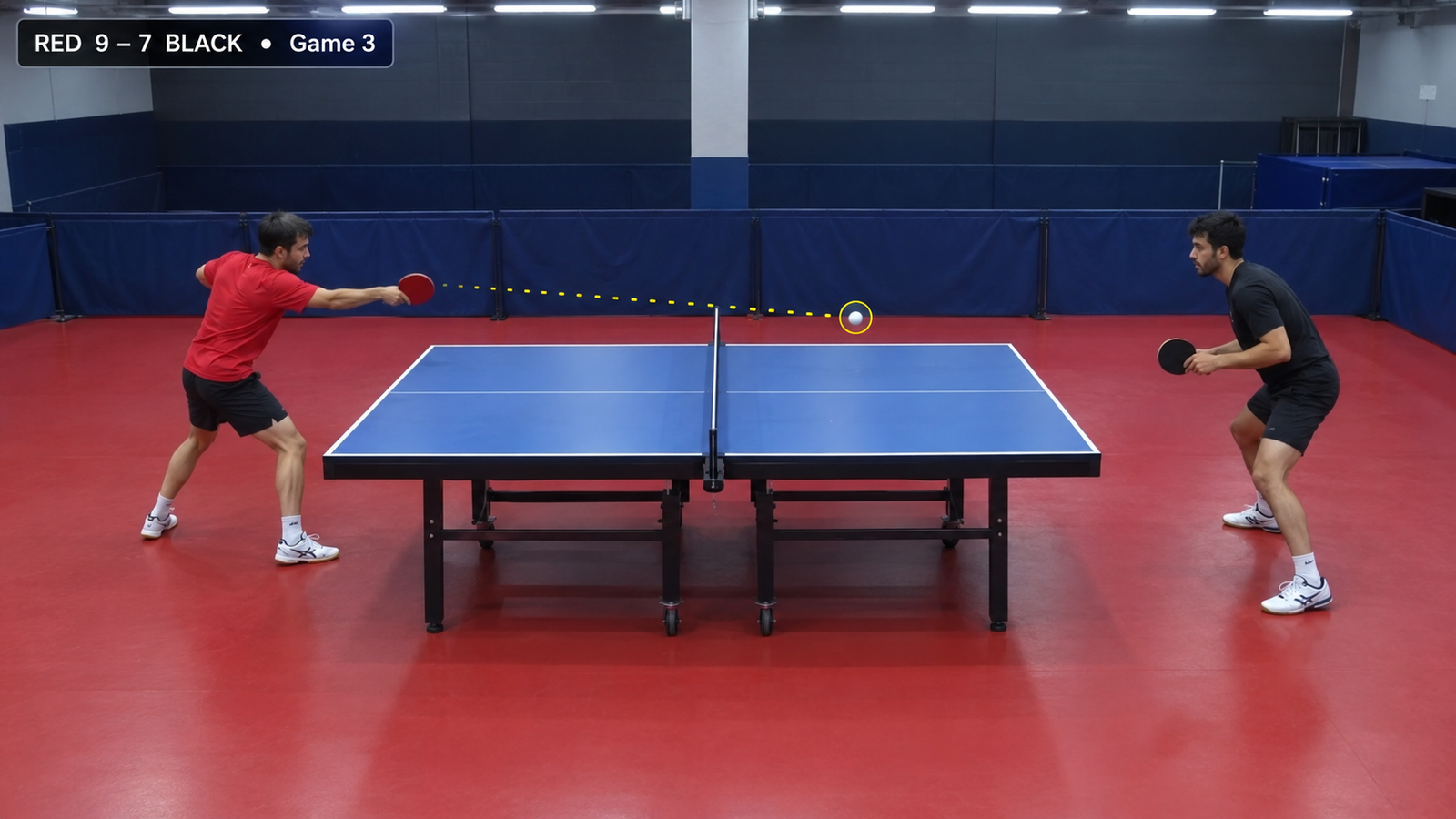
That is why generic tennis tools struggle on a padel court. Padel analytics needs models trained on padel footage, a camera position that sees the whole enclosure, and logic that understands padel's own rules, such as balls that stay in play after hitting the glass. Every feature below is built on that foundation, using the same ball tracking software that powers our other racket sports.
02 · Feature 1
Ball detection: how does AI find a padel ball behind glass?
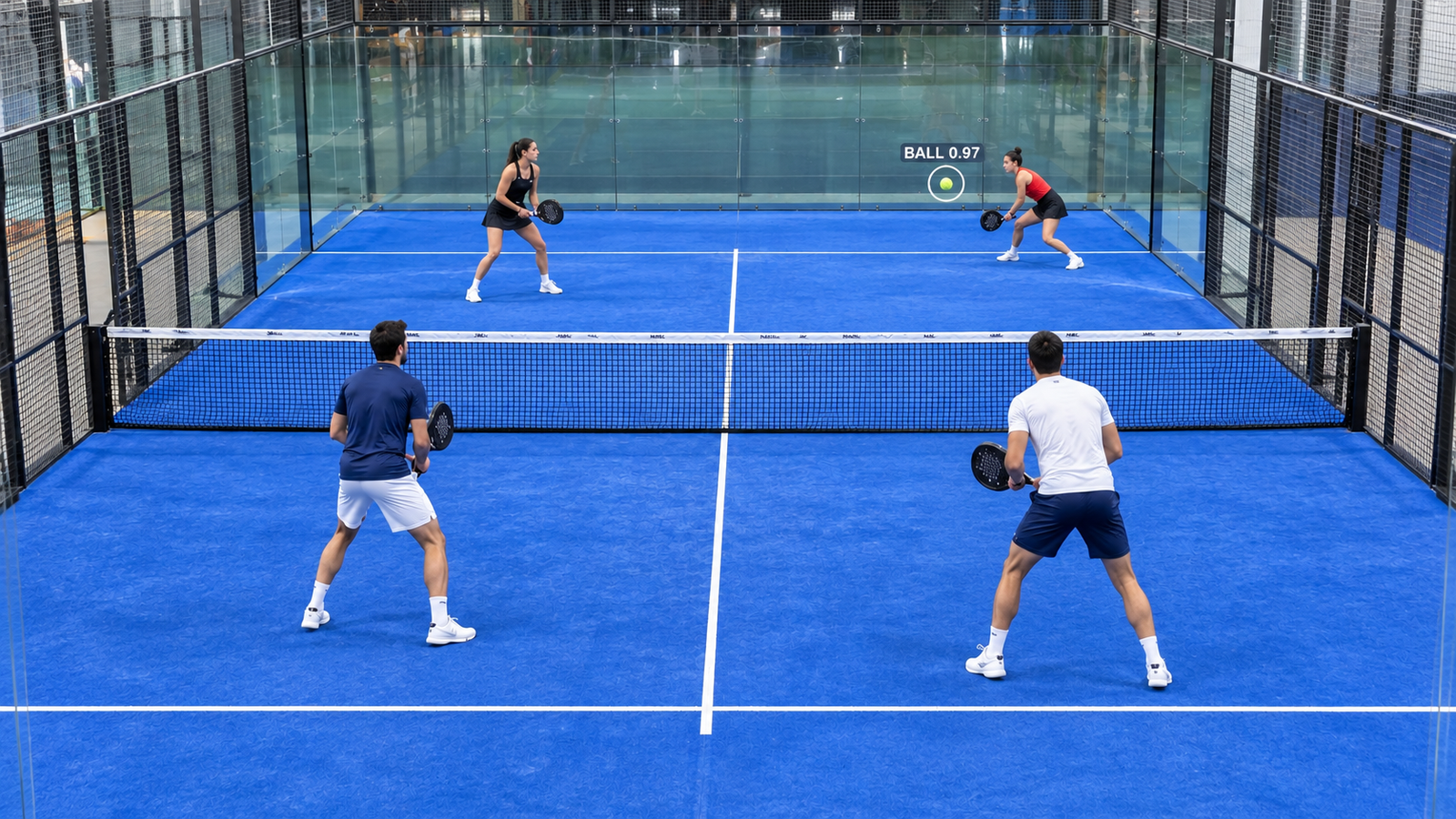
A padel ball is between 6.35 and 6.77 cm across, and in a 60 fps phone video it is often only a few pixels wide and stretched into a blur. A single frame is not enough to find it reliably, so the detection model looks at several consecutive frames together. A real ball moves in a consistent way from frame to frame, while a reflection on the glass or a spot on the mesh stays still or flickers.
The result is a ball position for every frame where the ball is visible, plus a confidence score. In our tests, mounting the phone high and centred behind the back glass gives the cleanest view, with all four corners of the court in frame.
03 · Feature 2
Ball trajectory: how does the app follow the ball when it disappears?
In every rally there are moments when the ball is hidden behind a player, lost in motion blur or framed against a bright light. A trajectory model joins the detected points into one continuous path and fills those short gaps, so the app still knows where the ball went.
Padel makes this harder than it sounds, because the ball can change direction inside a gap: it might hit a racket, the floor or the glass while nobody can see it. So the path is split at every likely hit or bounce, and each piece is filled on its own. That keeps the trajectory realistic and gives the next feature clean data to work with. You can see the same idea in our tennis ball tracking.
04 · Feature 3
Hit and bounce detection: floor, glass or racket?
Every change in the ball's direction is an event, and in padel there are more kinds of event than in tennis. The app classifies each one, because the rules depend on what the ball touched and in what order. The rules themselves are set by the International Padel Federation (FIP).
| Event | Why it matters in padel | What the AI looks for |
|---|---|---|
| Racket hit | Starts each shot and shows who played it | Sharp change in speed near a player |
| Floor bounce | Only one bounce is allowed on each side | Downward path turning upward at floor level |
| Glass rebound | Ball stays in play after a floor bounce | Sideways reversal at a wall position |
| Wall before floor | Point lost if it hits their glass first | Wall contact with no bounce before it |
| Second bounce | Ends the rally | Two floor bounces on the same side |
05 · Feature 4
How is padel ball speed measured from a phone video?
Speed needs real distances, and a video only has pixels. The app solves this with court calibration: it finds known lines on the court, such as the service lines 6.95 m from the net, and builds a map from the image to the real court. Once every ball position is in metres, speed is simply the distance travelled between frames divided by the time between them.
This gives a speed in km/h for every shot, from a soft chiquita to a full smash. Players can compare their serve, bandeja and smash speeds week by week, and coaches can see whether a shot is getting faster or just higher.
- 20×10 mCourt size used to calibrate every frame
- 6.95 mService line distance from the net, a key reference
- 60 fpsPhone frame rate recommended for speed and bounces
06 · Feature 5
Rally count: why the number of shots matters more than the score
A rally starts with the serve and ends when the ball bounces twice, goes out or hits the wrong wall. The app counts every rally and every shot inside it, and keeps a record of how each one ended. Over a session, those numbers say more about a pair's game than the final score.
- Rallies per session: how much real playing time a match or drill produced.
- Shots per rally: a good measure of consistency, especially for club players.
- Longest rally: a simple, motivating number for training and social media clips.
- How rallies end: winners, errors into the net, balls out and double bounces, by player.
- Serve and return: how often the serving pair wins the rally, and how quickly.
07 · Feature 6
AI player tracking: where are all four players during a rally?
Padel is a pairs game, so positioning decides points as much as shot quality. The app detects all four players in every frame and gives each one a stable ID, even when partners cross or block each other. The same court calibration used for ball speed turns their positions into real metres on a top-down court view.
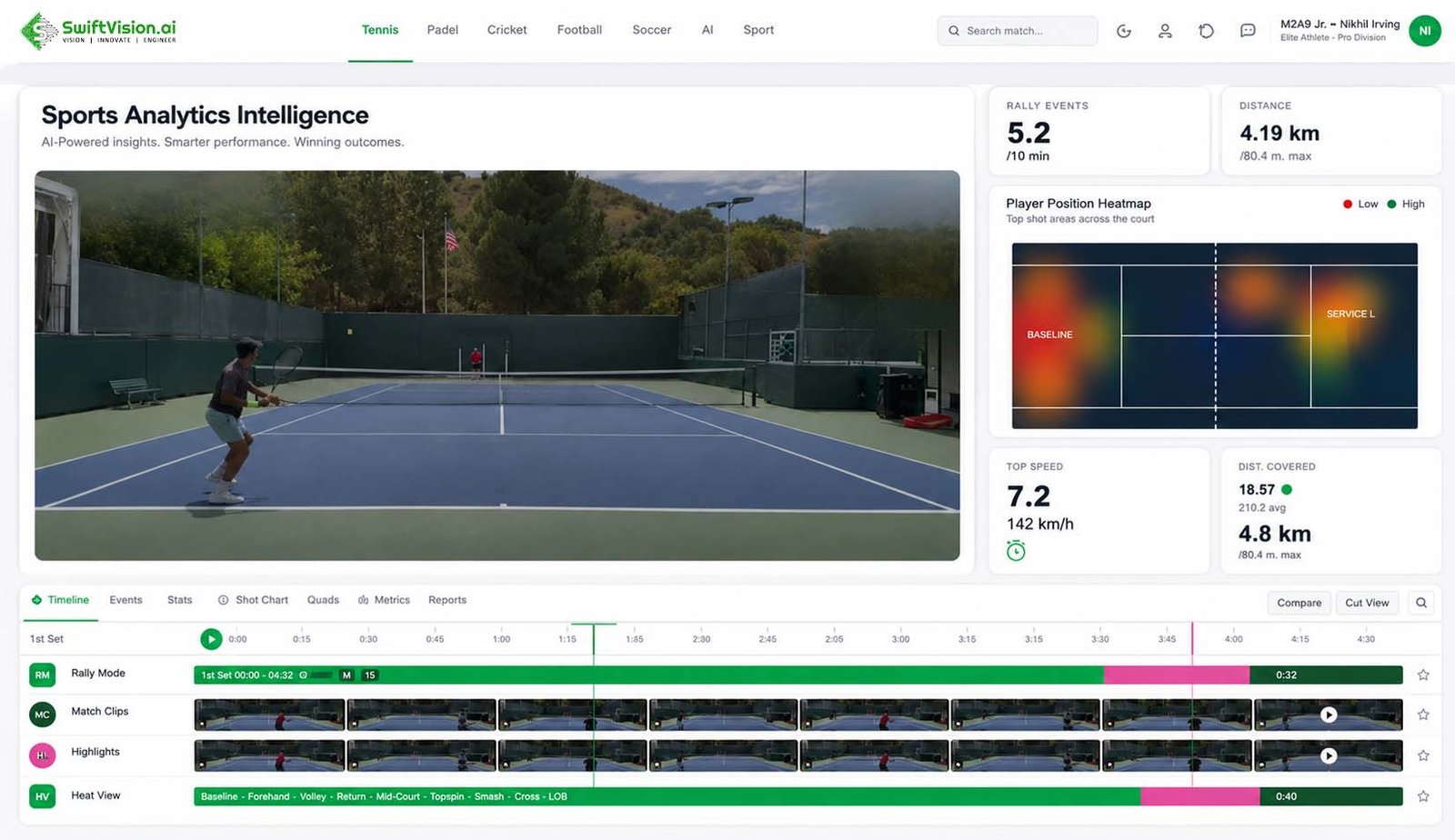
From that come numbers coaches use every day: distance covered and sprint count for each player, time spent at the net versus the back of the court, and a heatmap of where each player stands. Linked to hit detection, the app also knows who played each shot, so every speed and every error belongs to the right player.
- Net vs back court: how quickly a pair moves forward after a lob or a good return.
- Pair spacing: the gap between partners, and the moments it opens up in the middle.
- Shots by player: who hits the most bandejas, smashes and errors in each set.
08 · Feature 7
Highlight clips: how does the app cut the best moments automatically?
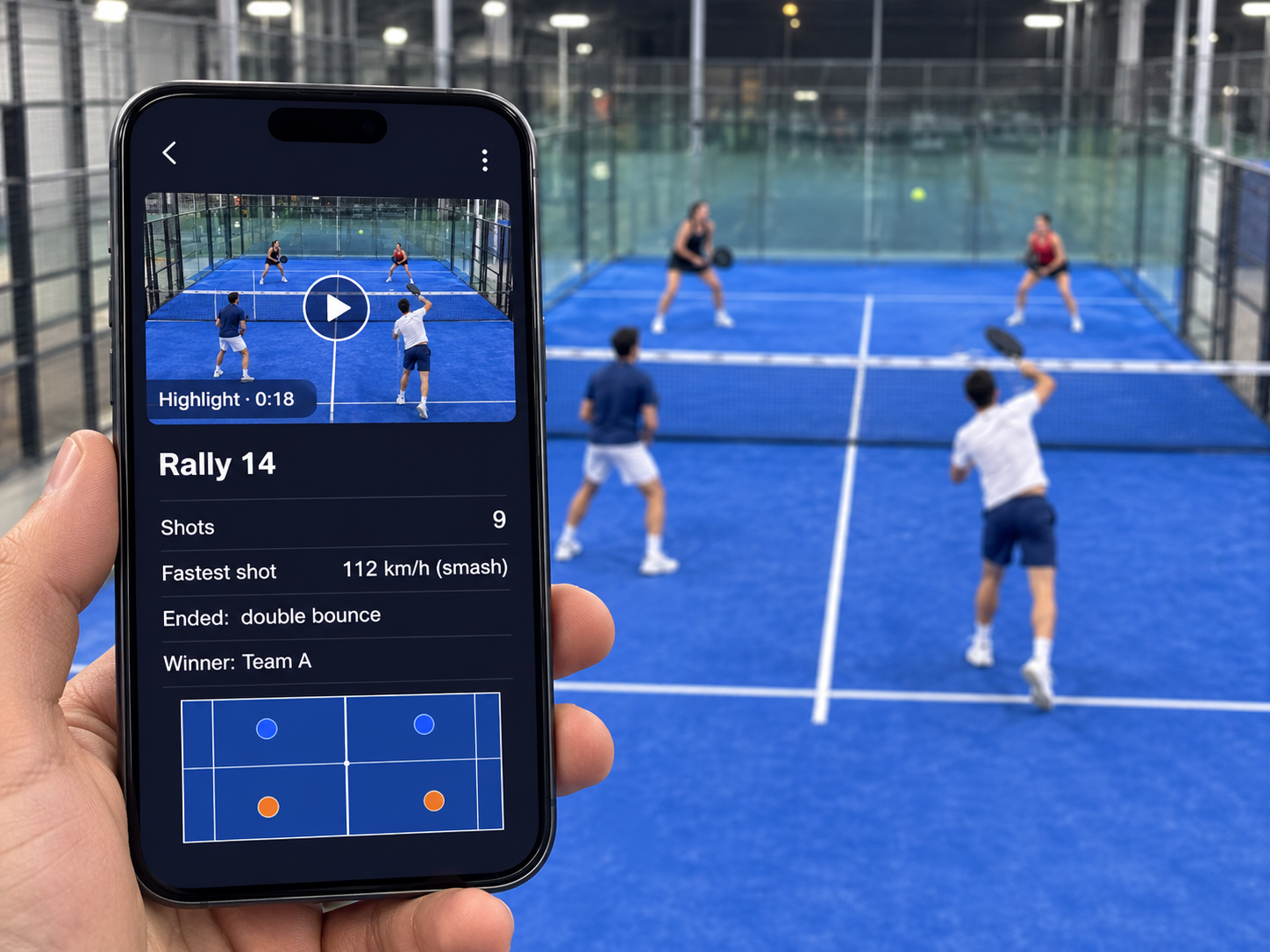
Nobody wants to scrub through a 90-minute video to find one great point. Because the app already knows where each rally starts and ends, it cuts every rally into its own short clip and tags it with the rally length, the fastest shot and how it ended.
That makes highlight reels almost free. Players can jump straight to their longest rallies or fastest smashes, coaches can collect every error at the net into one review playlist, and clubs can send each booking a set of clips to share on social media, which brings new players to the courts.
09 · Feature 8
Racket sensor connectivity: what video alone cannot see
A camera sees the ball very well, but it cannot feel the hit. That is why the app can connect to an optional sensor mounted on the racket. The sensor measures swing speed, impact force, the direction the racket face points and its tilt at contact, and confirms the exact moment of each hit.
Because the sensor data is synced to the video frame by frame, every shot on screen comes with its racket numbers. A coach can open one smash and see the ball speed from the video next to the swing speed and impact force from the sensor, then compare it with a slower smash from the same session.
10 · One rally
What does the app record in a single rally?
Here is how the eight features work together on one rally, from the serve to the summary.
-
 Step 01
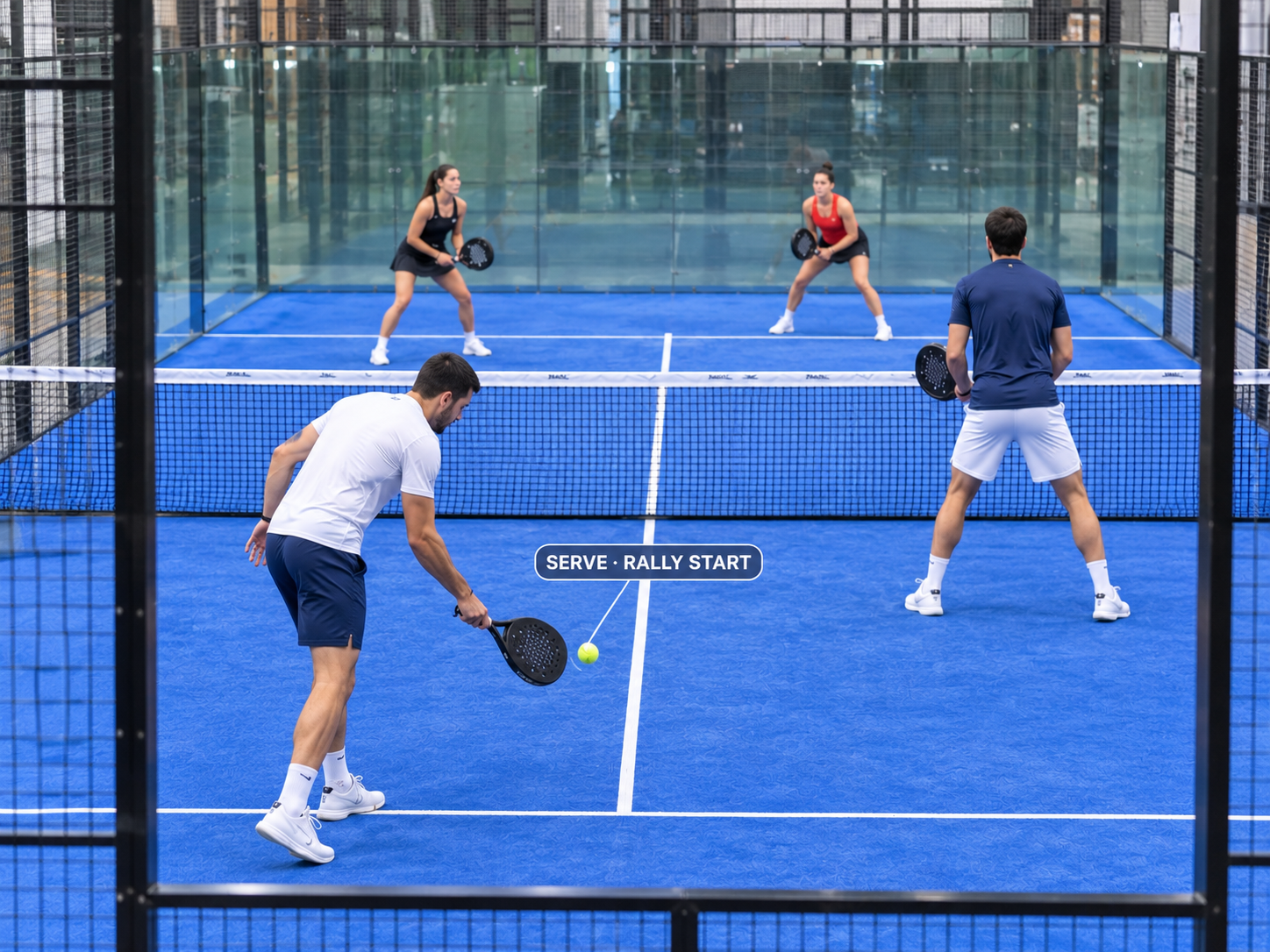
Serve detected
The bounce before the serve and the racket hit mark the start of a new rally.
-
 Step 02
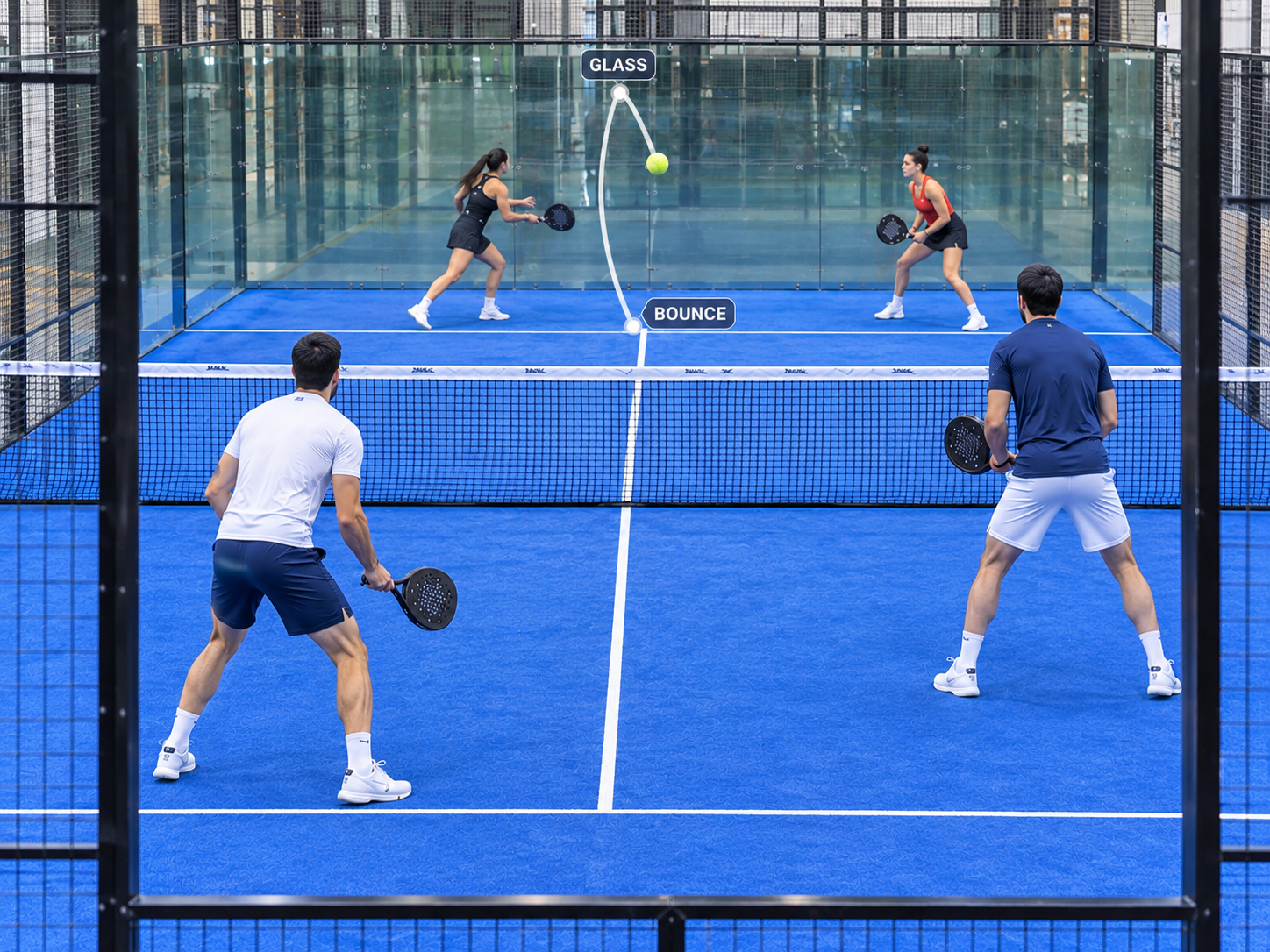
Ball tracked
The ball is followed shot by shot, including rebounds off the glass and short hidden moments.
-
 Step 03
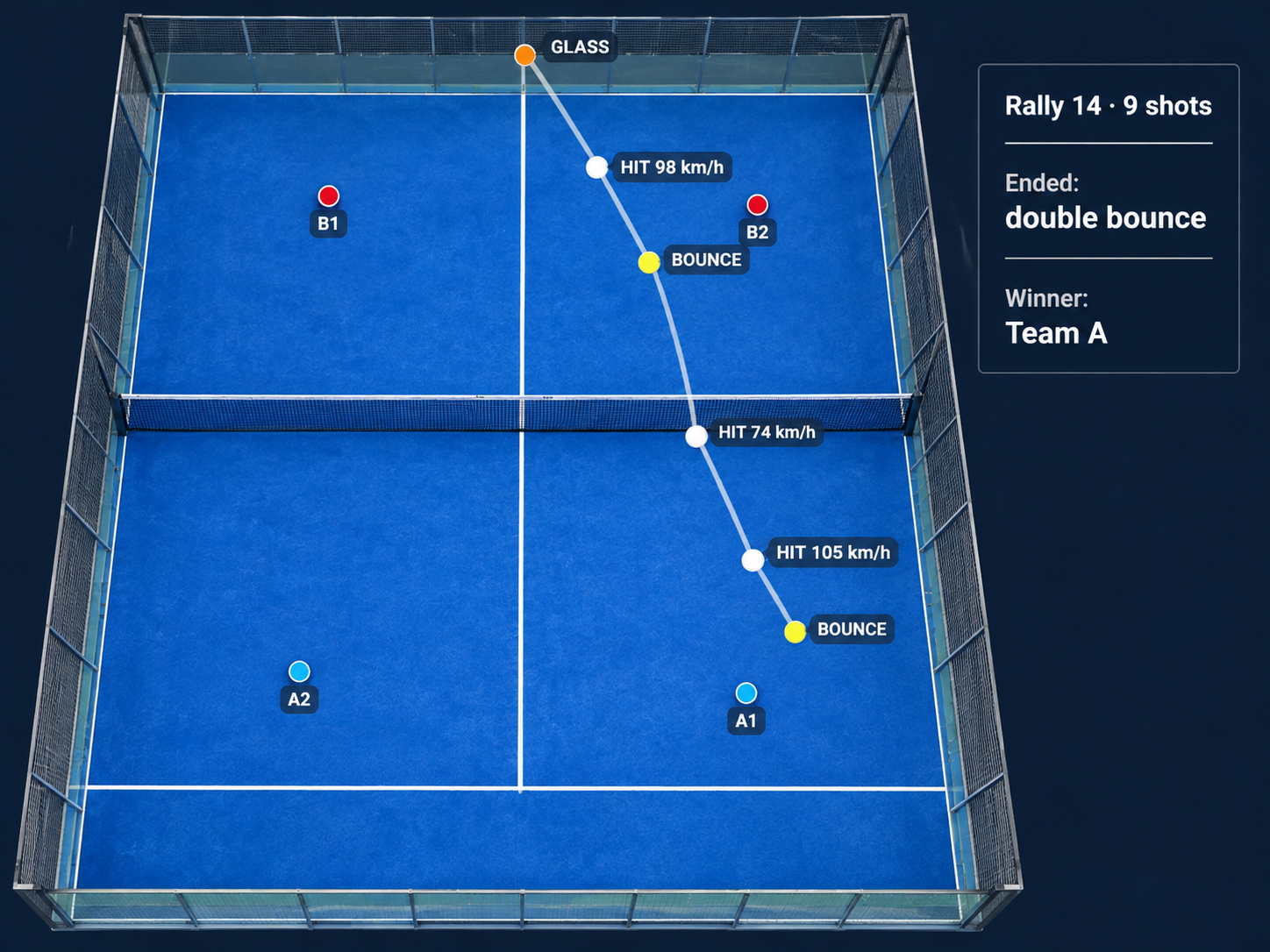
Events logged
Each hit, bounce and wall contact is labelled, with the speed of every shot.
-
 Step 04
Rally summary
The rally is saved with its shot count, speeds, player positions and a ready-to-share clip.
11 · Who it is for
Who uses padel analytics?
The same data serves three very different users. We also build custom sports and fitness apps around it.
-
Players & coaches
Shot speeds, rally stats and clips to train with purpose.
-
Clubs & academies
Court cameras that give every booking match stats and highlights.
-
Padel brands & app makers
Ball tracking and sensor data inside your own product.
12 · FAQ
Frequently asked questions
What is padel analytics?
Padel analytics is the use of video and sensor data to measure what happens in a padel match or training session, such as ball speed, rally length, hits, bounces and how each point ended. AI turns a normal phone or court camera video into these numbers automatically.
Can I use a phone to record padel for analysis?
Yes. A modern phone recording at 60 fps is enough. Mount it high and centred behind the back glass, in landscape mode, so the whole court, the net and all four corners are in view.
How accurate is ball speed from a phone video?
Accuracy depends mostly on camera position, frame rate and calibration. With the court calibrated and the phone recording at 60 fps from behind the back glass, speeds are consistent enough to compare shots and track progress over time.
Can the AI tell a glass rebound from a floor bounce?
Yes. A floor bounce is a downward path that turns upward at floor level, while a glass rebound is a sideways reversal at a wall position. The app labels each one, which is what makes rule-based rally tracking possible in padel.
Does the app track the players as well as the ball?
Yes. AI player tracking follows all four players with stable IDs, measures distance covered and court position in metres, and links every shot to the player who hit it.
Can it make highlight clips automatically?
Yes. Every rally is cut into its own clip and tagged with its length, fastest shot and how it ended, so players, coaches and clubs can find and share the best moments in seconds.
Do I need the racket sensor?
No. Ball detection, trajectory, hit and bounce detection, ball speed, rally count, player tracking and highlight clips all work from video alone. The optional racket sensor adds swing speed, impact force and racket angle for players and coaches who want deeper data.
Can you build padel analytics into our club or product?
Yes. SwiftVision AI builds padel analytics for clubs, academies, padel brands and app makers, from court camera setups to custom apps and sensor integrations. We scope the features and hardware on a short call.

Clubs, academies and padel brands
Bring padel analytics to your courts
Book a 30-minute call. We'll look at your courts, cameras and goals, and show how ball tracking, speed and rally stats would work for you.